
8. Shipping Containers
Street Photography

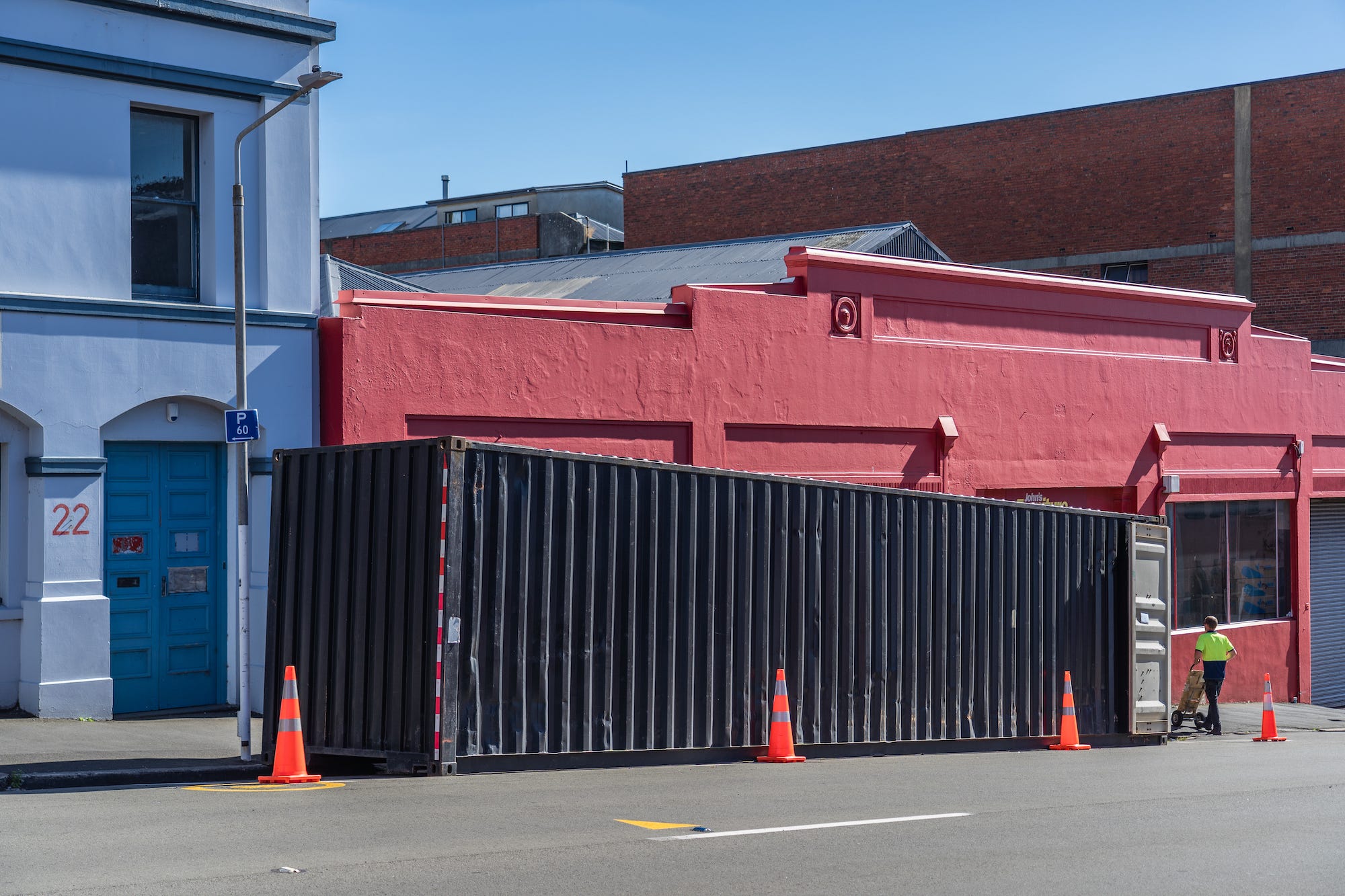
You usually see them in transit — on ships, trains, or trucks. Plain and unassuming, they don’t stand out. Their style is utilitarian and minimalist. They are as interchangeable as the people who direct their movements. Native to no country, they are able to shift between them without notice or difficulty. These restless international travellers don’t stay anywhere for very long. If they could speak, their language would be Esperanto.
Shipping containers can be found everywhere, but they don’t belong anywhere in particular. Their job is to keep moving. To keep the economy moving. They are the cells that carry oxygen through the circulation system of international trade. And if their movements are blocked or obstructed, there will be trouble.
Like boxes extruded from an accountant’s spreadsheet, they carry whatever can be created, quantified, and consumed. They will take what they are given but will never hold an opinion or express a preference. Anything goes. Laissez-faire.
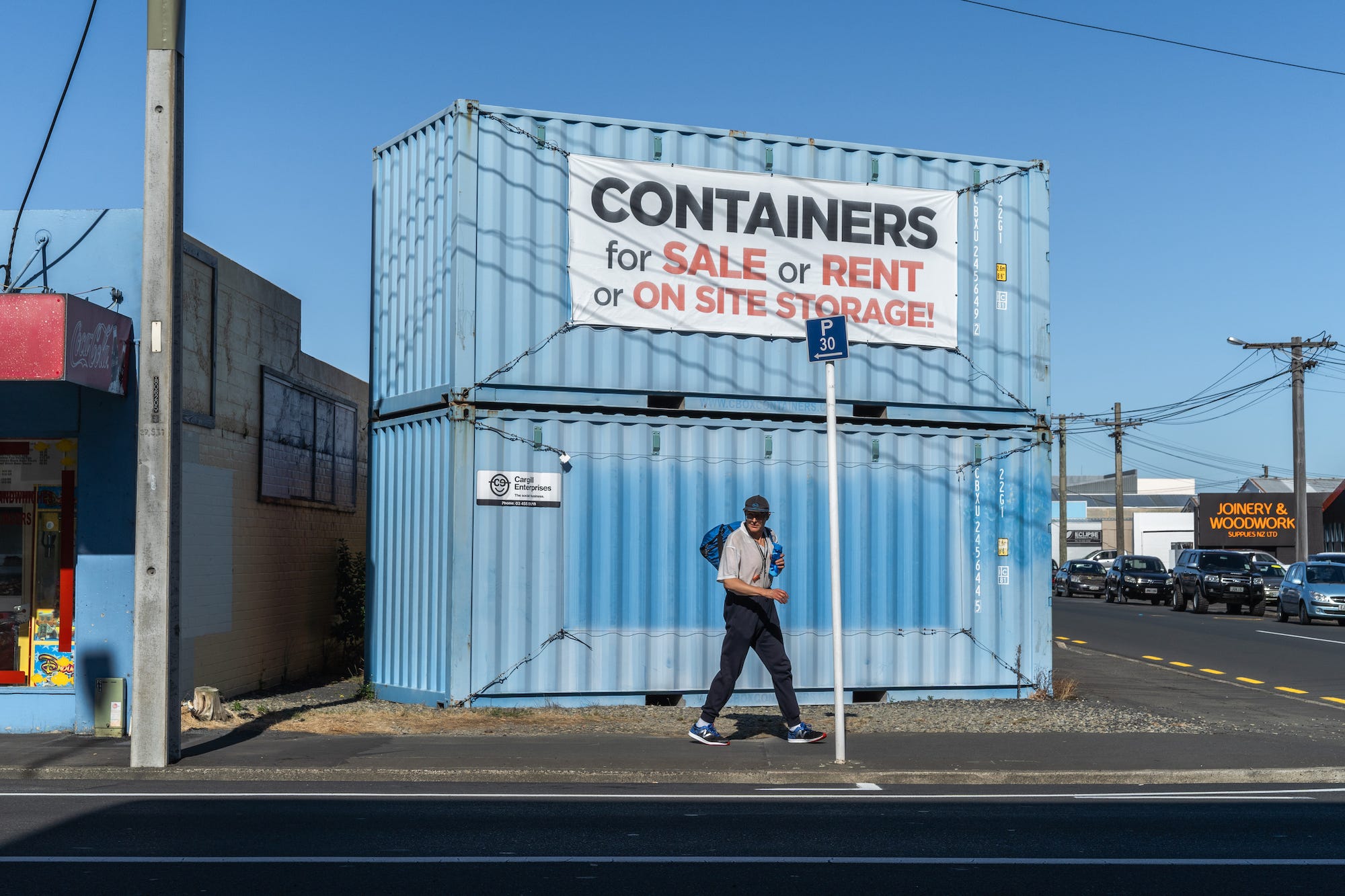
They are oblivious to local differences in culture or climate. Transportation and storage systems everywhere have been adjusted to accommodate their stackable height x width x length. They are the rational expression of the logic of logistics. Standardised. Modular. Intermodal.
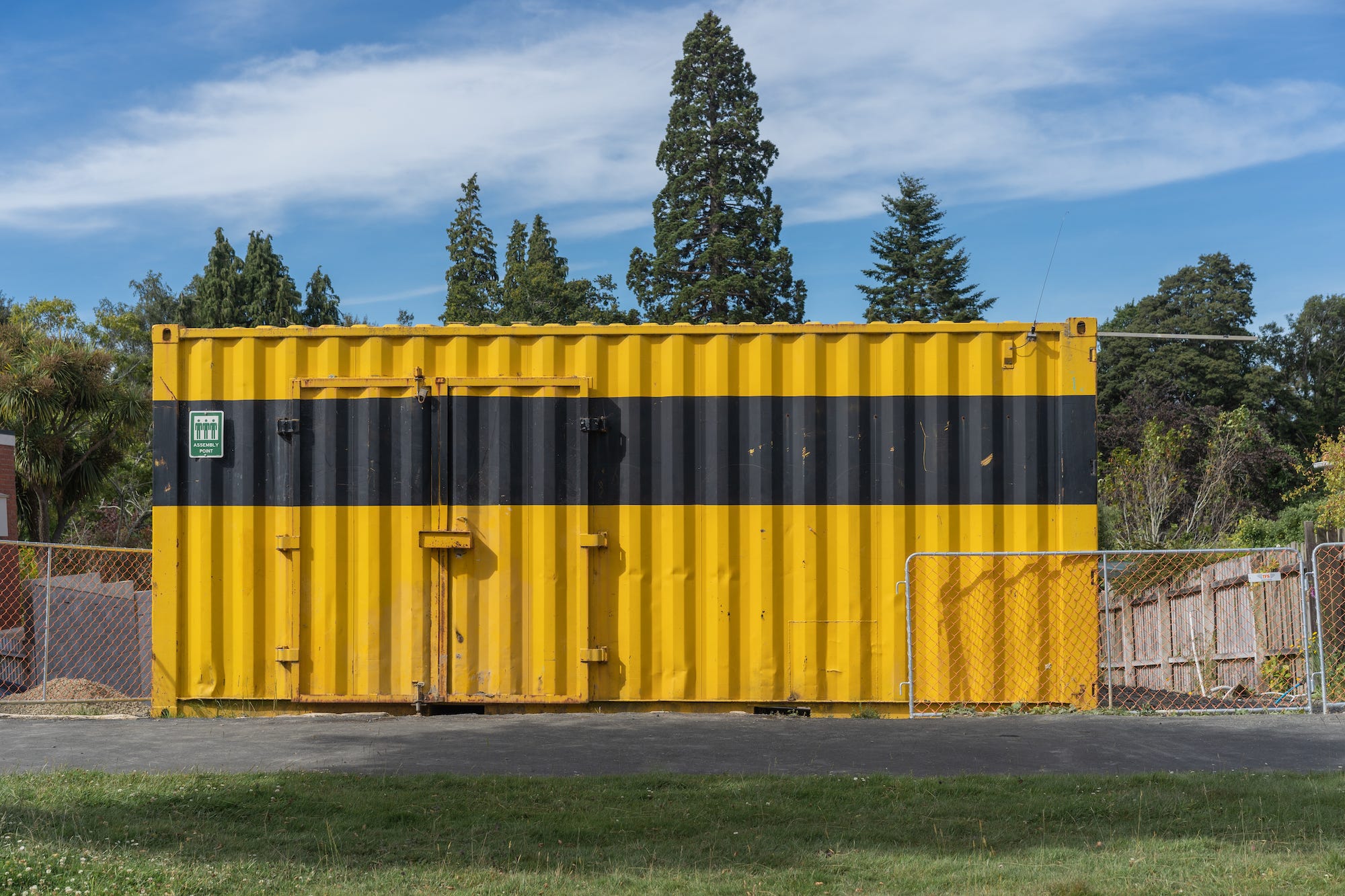
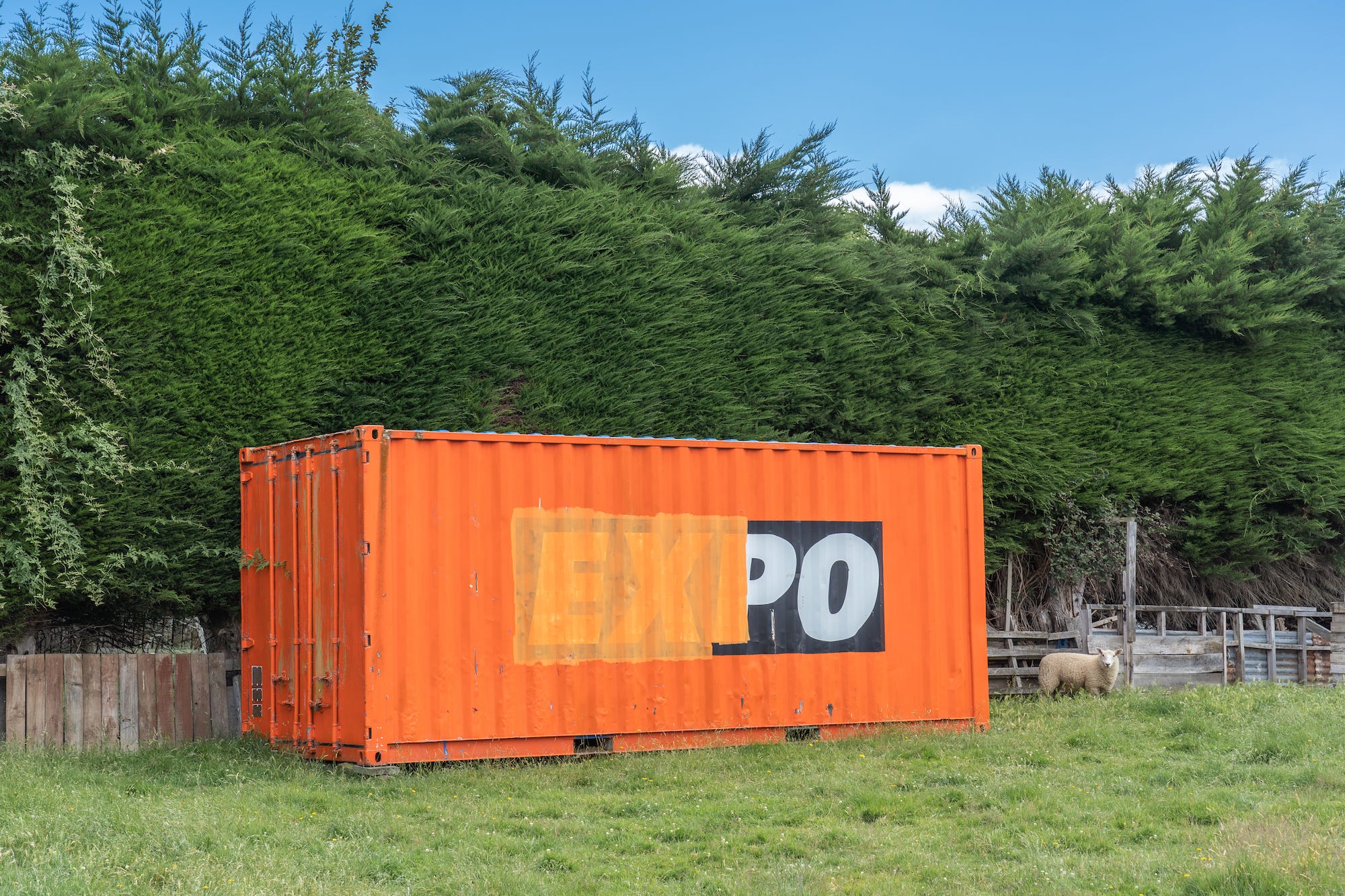
Like worn-out coins, they are eventually taken out of circulation. Some might find a place in semi-retirement as a makeshift office on a construction site, a tool shed in someone’s back garden, or a dry place to store feed in a farmer’s field. Others will just sit empty and slowly rust away.
They won’t be remembered after they’re gone. But their rectangular carbon footprint will have a lasting impact. And the monumental rubbish dumps filled with the stuff they carried around the globe will serve as memorials to their work and the system they kept going.
Download the photos
The photos in this post are licensed under the Creative Commons Attribution 3.0 New Zealand (CC BY 3.0 NZ) license (required attribution: Mark McGuire). You can download the full-resolution original images from here.
What’s next?
I’ve recently been photographing street fairs, road markings, a bagpipe band competition, and signs with nothing on them. I plan to publish a post about one of these topics, or something else, next weekend. You can receive the next post by email by subscribing below.
What do you think?
Is there something relating to street photography that you would like me to discuss? Is there something you would like to share (a resource, a technique, or a personal photographic experience)? Please leave a comment at the end of this post. Just say hello if you like.
Another fabulous post, Mark. You took an alternative tack, as usual, not the common glorification of containers repurposed for Instagram-ready tiny homes, for instance. The Christchurch complex was a shining example of practical repurposing and should have endured as a model for others. The best part, in my humble opinion, of your piece was how the decidedly unglamourized images matched the criticisms conveyed by your words.
Great post, Mark. The containers are also interesting when stacked together, such as by the railway yard off Dunedin's Strathallan Street. It's like a mini city down there, with containers stacked up to five levels high. In other parts of town there are rules and expectations about built form, but down there and at the port you just stack 'em up, as the schedule dictates. I'm not arguing for more planning regulations there, BTW!