
76. They Save We Pay
Protesting cuts to the new Dunedin Hospital

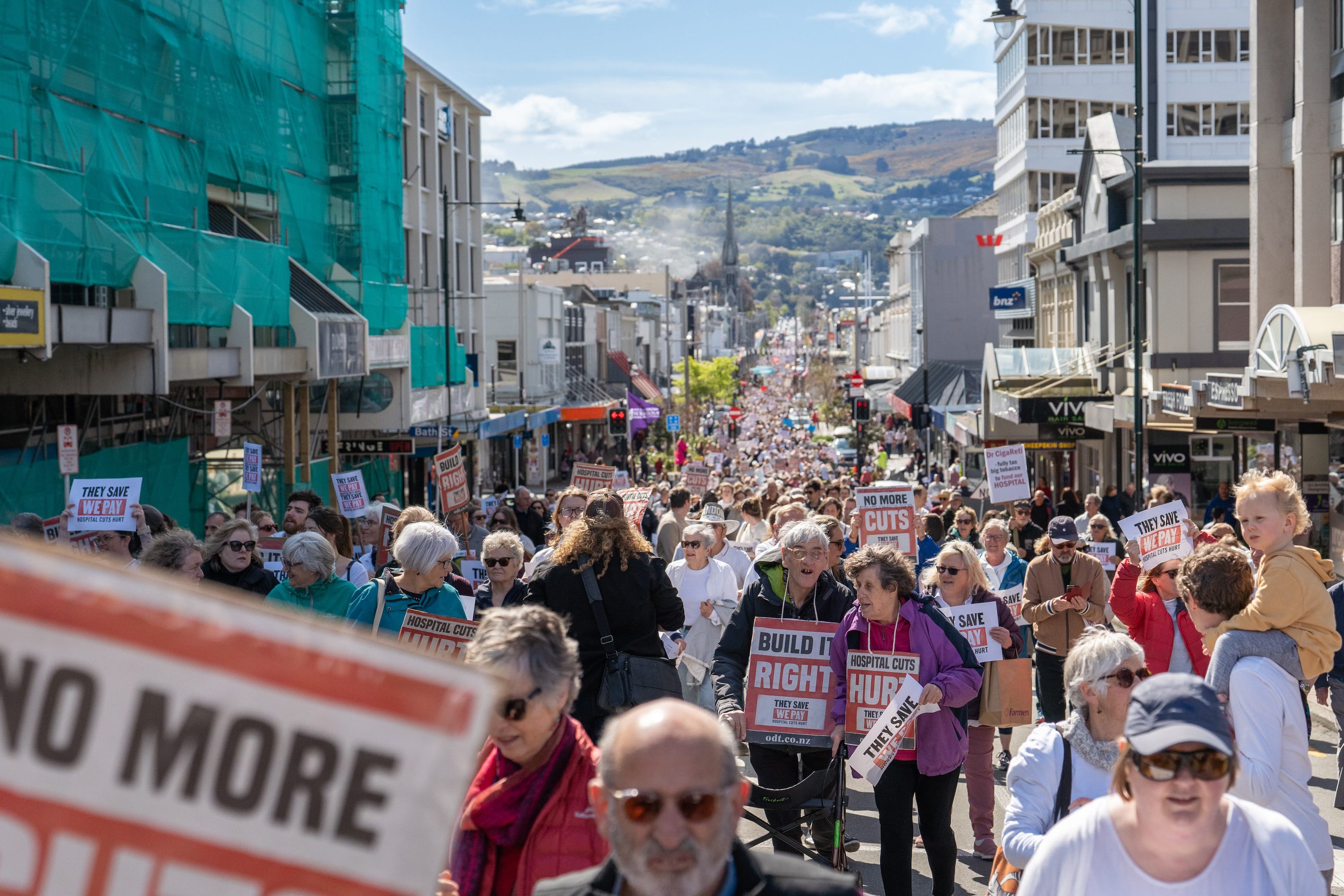
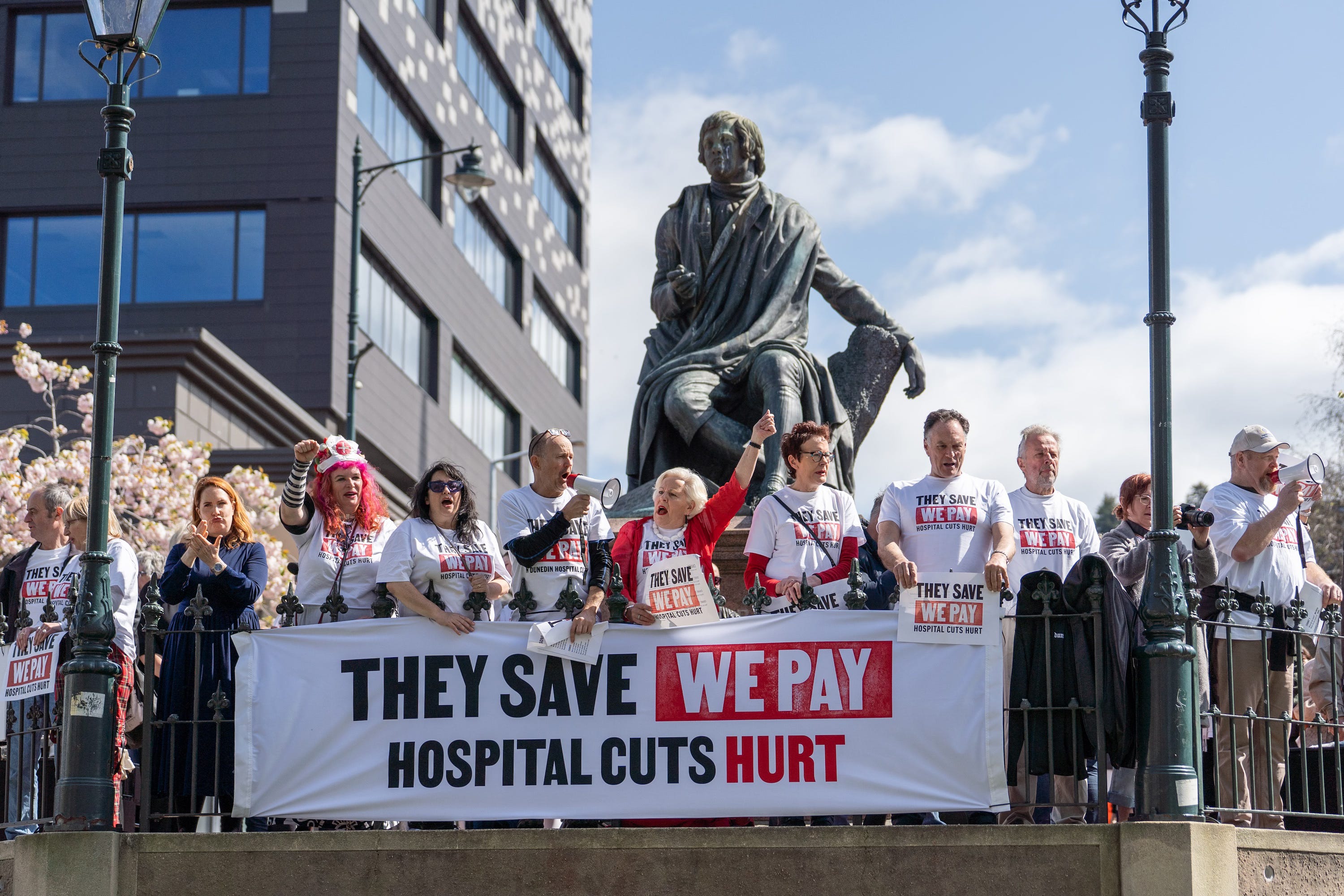
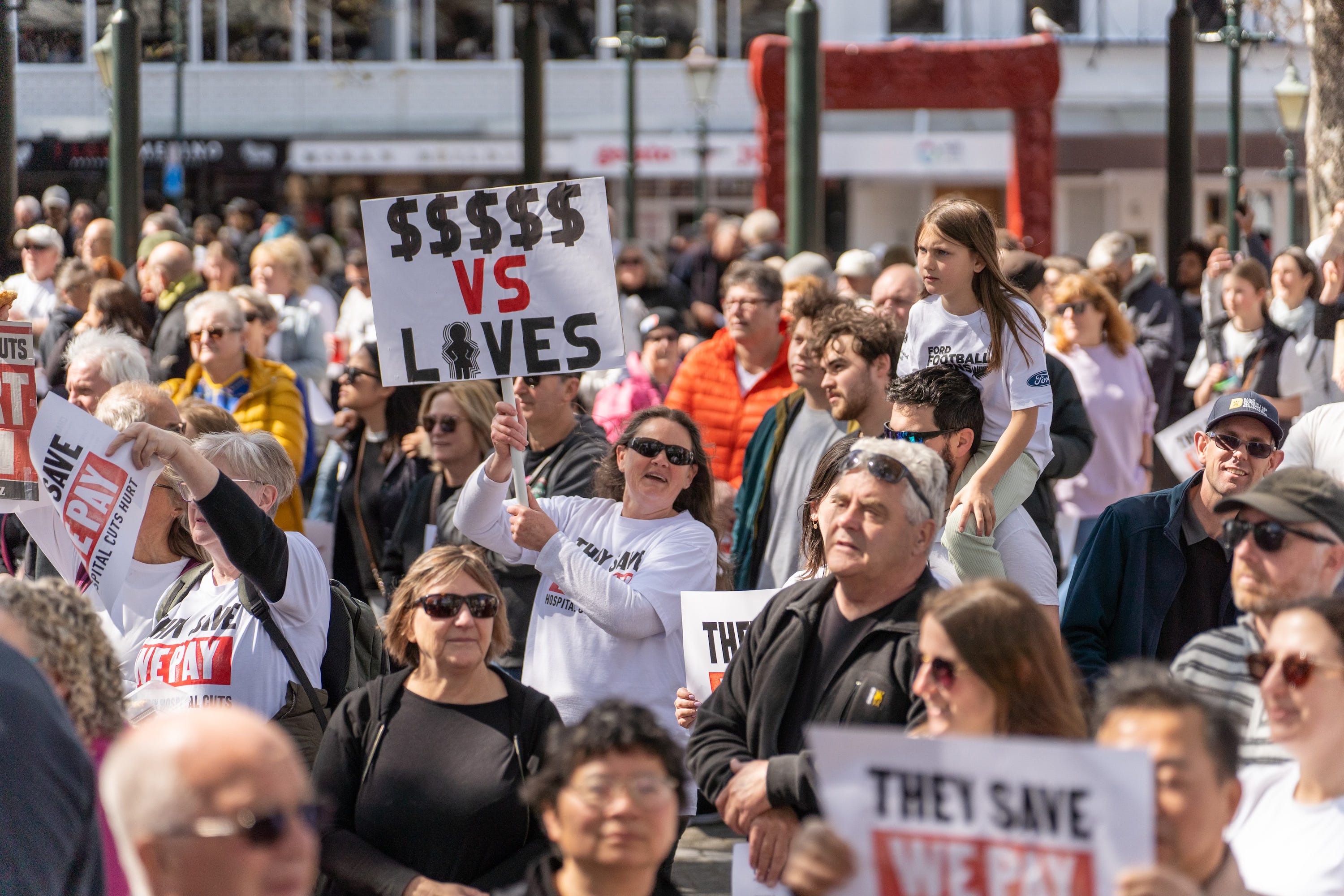
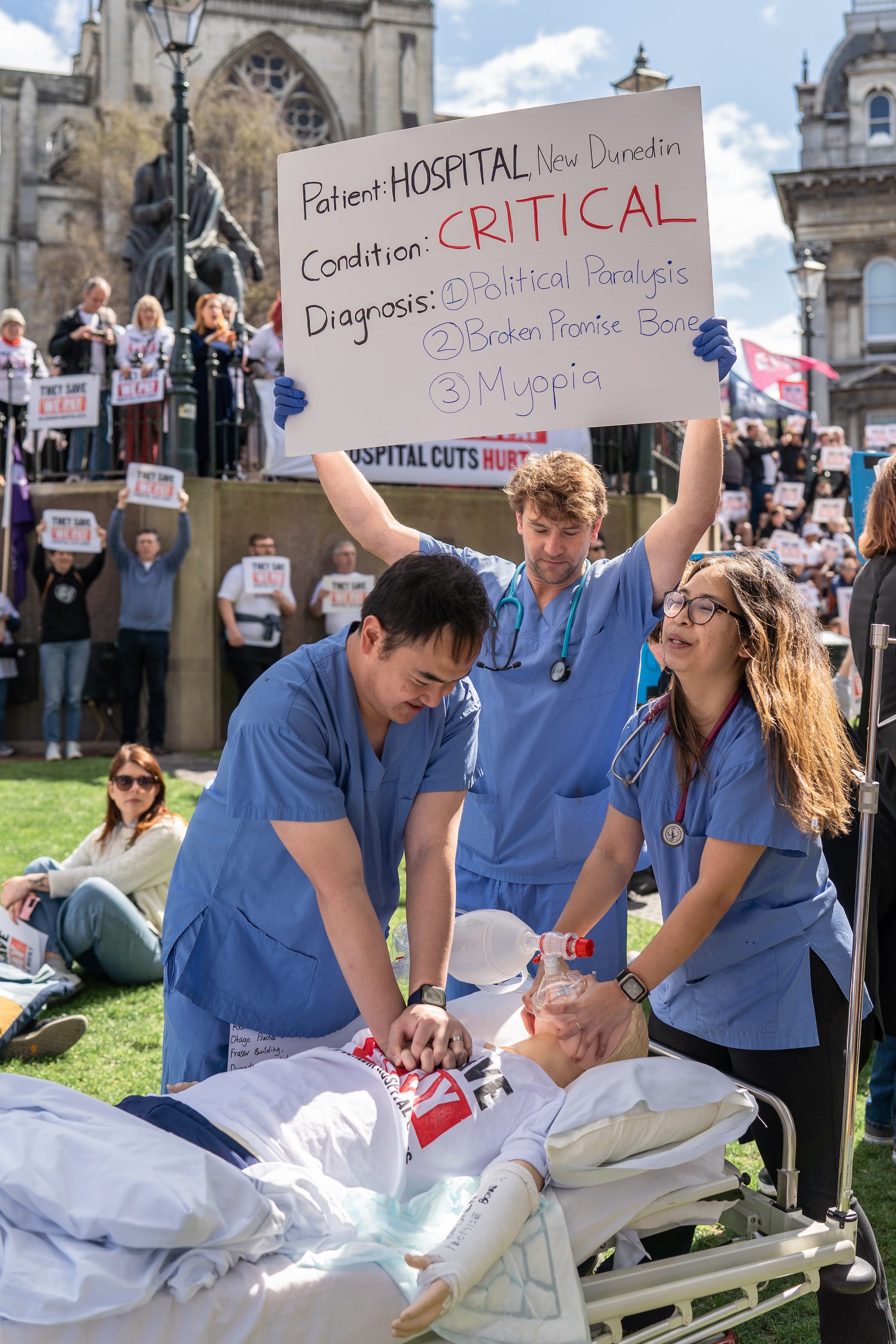
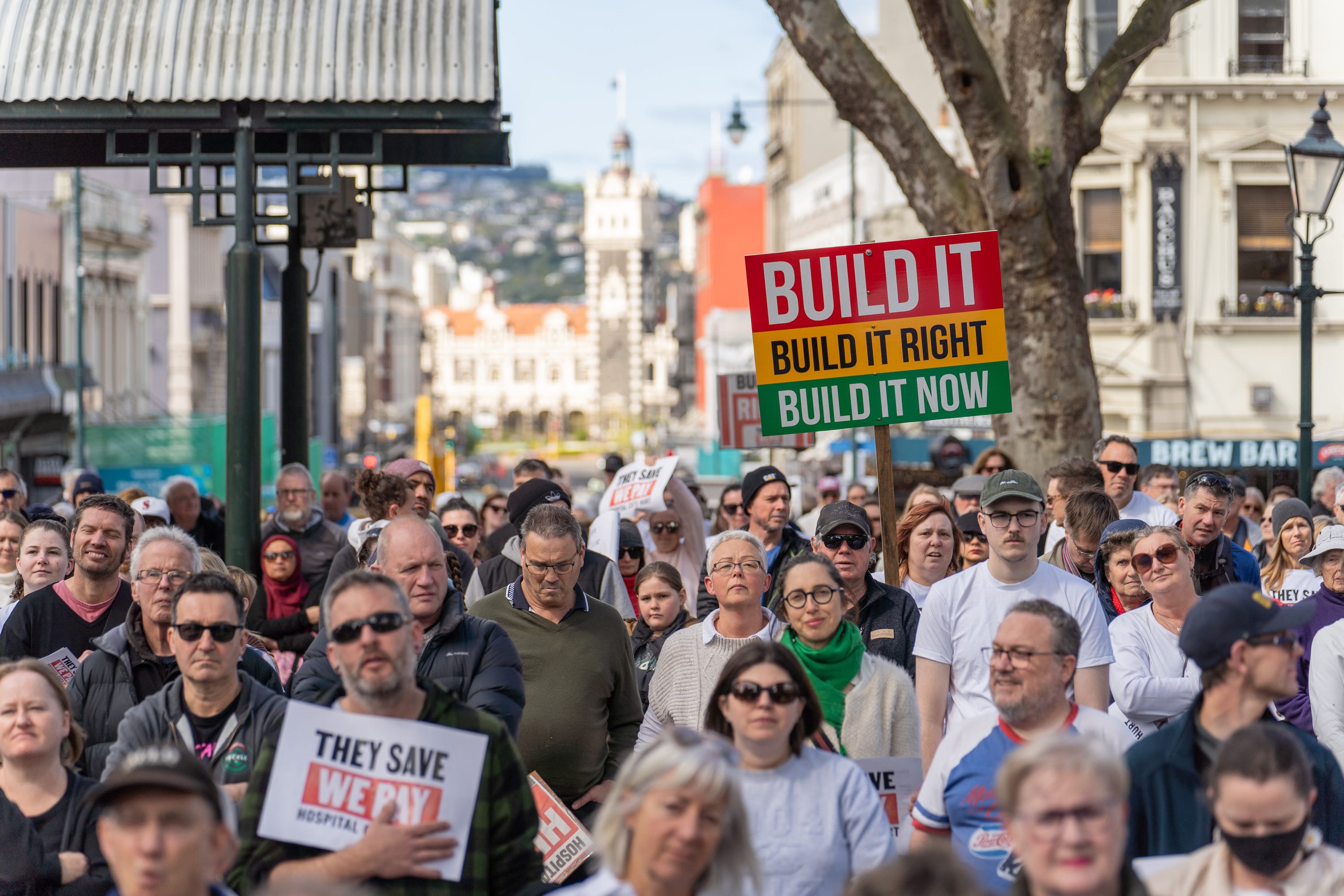
On Saturday, September 28, an estimated 35,000 people took to the streets in Dunedin, New Zealand, to protest planned cuts to the new Dunedin hospital. I’ll provide some context before discussing the photographs.
In 2017, the National government announced a new ‘state-of-the-art’ public hospital for Dunedin. The Labour government that followed deferred the project and made cuts due to cost concerns. National Party leader Christopher Luxon promised during the 2023 election campaign that, if elected, his party would ensure the hospital was built without further delays or cost-cutting, as designed by architects, planners, and clinicians. National won the election, but Christopher Luxon, now Prime Minister, has broken his promise.
With the outpatient building under construction and the last pile in place for the inpatient building, Health Minister Dr. Shane Reti recently announced that, to keep the project within a fixed and limited budget, the new hospital would be downsized with reduced capacity. Possibilities include building in stages, reducing the number of floors in the inpatient building, reducing fit-outs, and retrofitting the old hospital for some services (an option rejected as unworkable in 2017).
It’s been a busy year for political protests in New Zealand, and I’ve documented quite a few. This was by far the largest demonstration I’ve seen in Dunedin, but it’s not surprising that so many turned out to protest the hospital cuts. The University of Otago is one of only two medical schools in the country, and Dunedin Hospital is a teaching hospital. It provides essential services for the health and well-being of over 250,000 people across a large part of the South Island. For many years, funding for healthcare and other crucial public infrastructure in New Zealand has not kept pace with the needs of its fast-growing population. The fear that short-term, self-imposed financial constraints could compromise healthcare well into the future was enough to get a large number of people out into the streets to make themselves seen and heard.
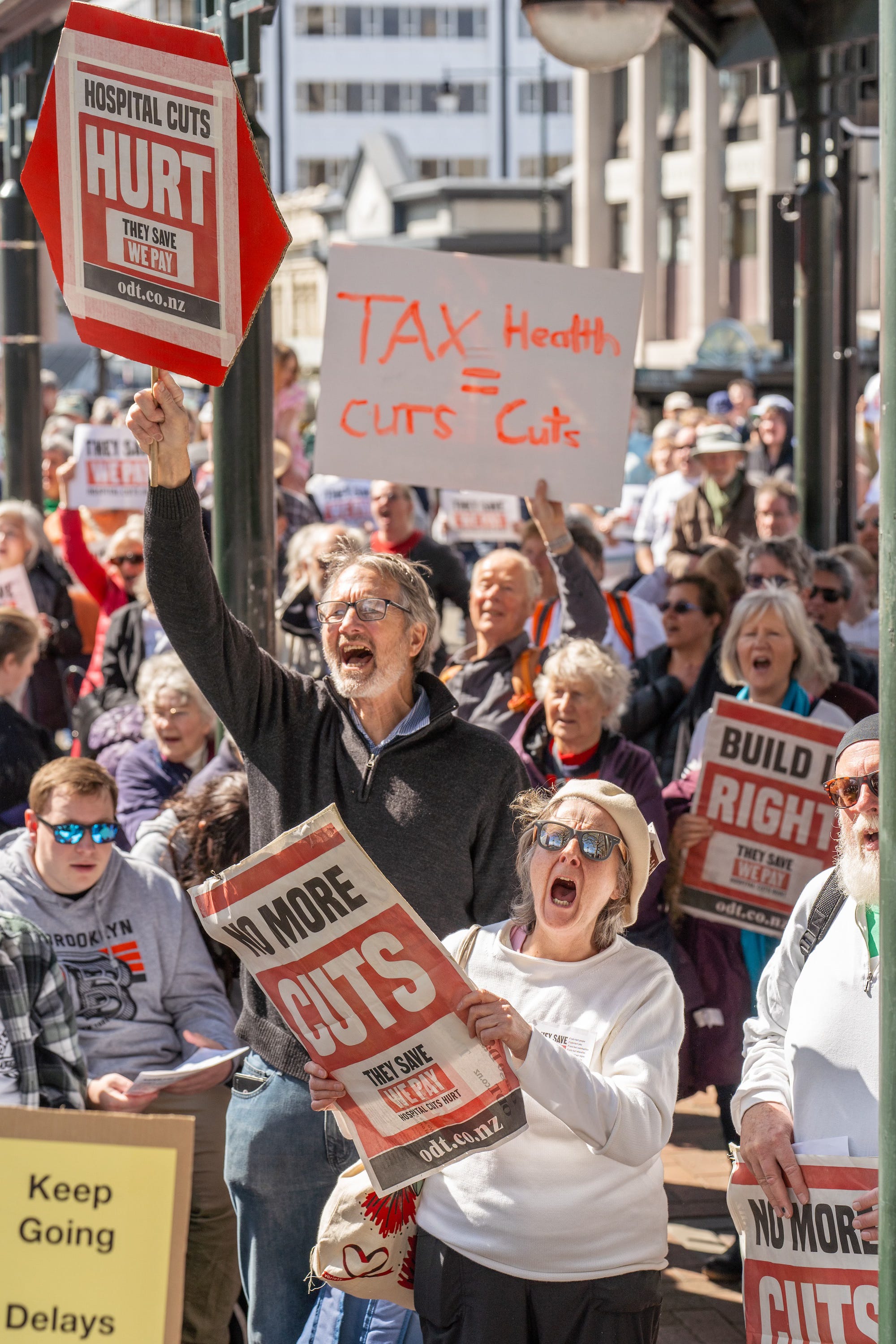
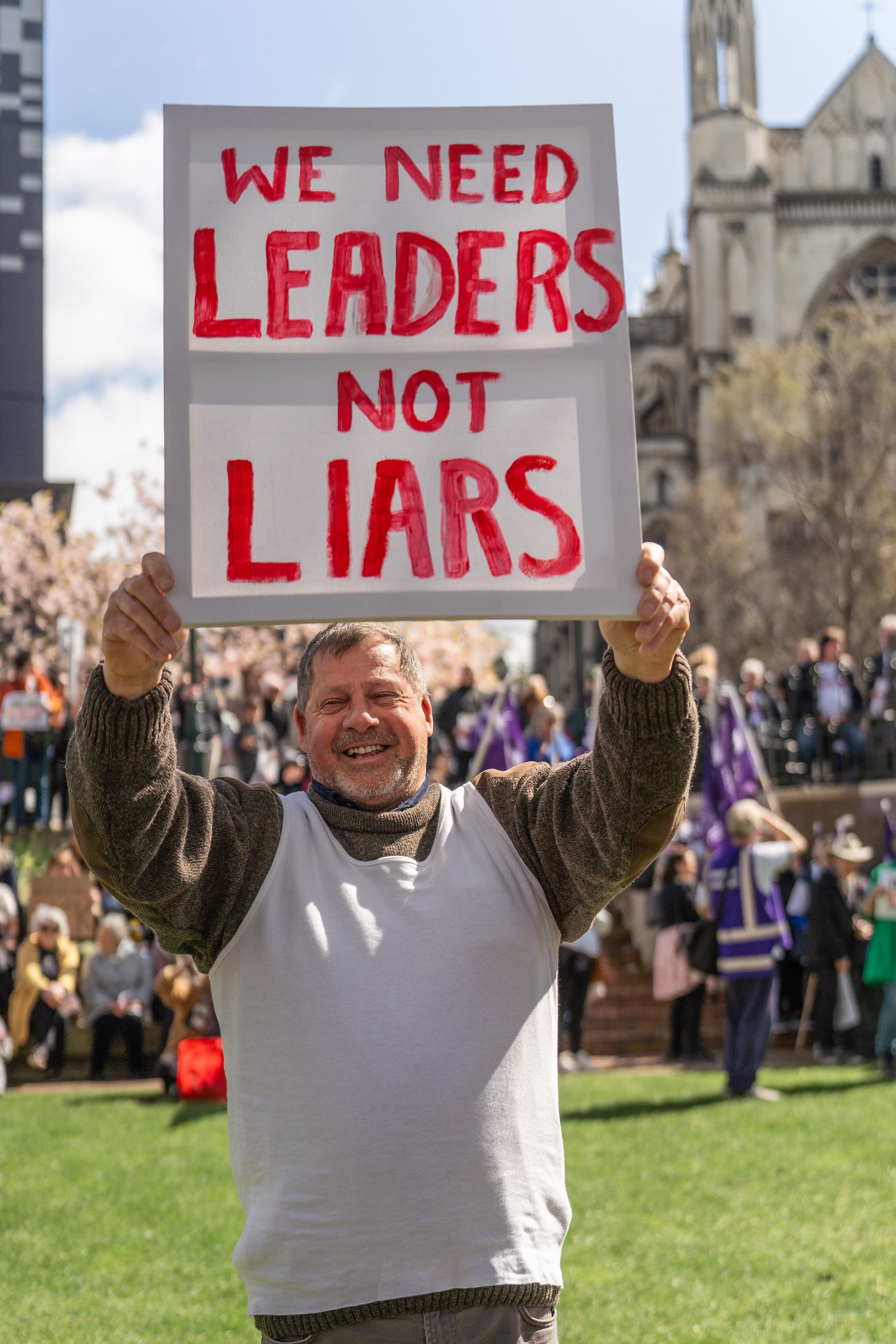
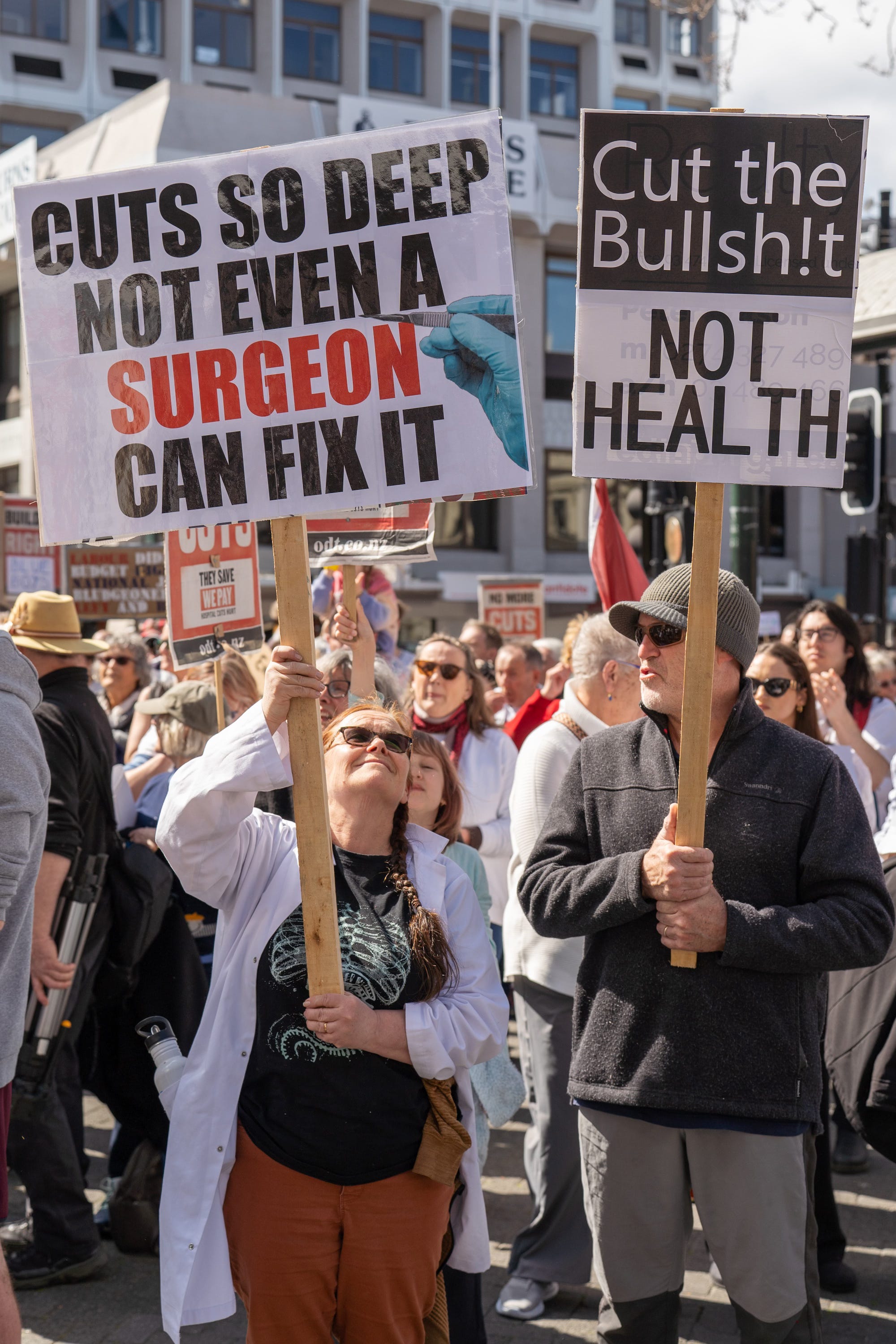
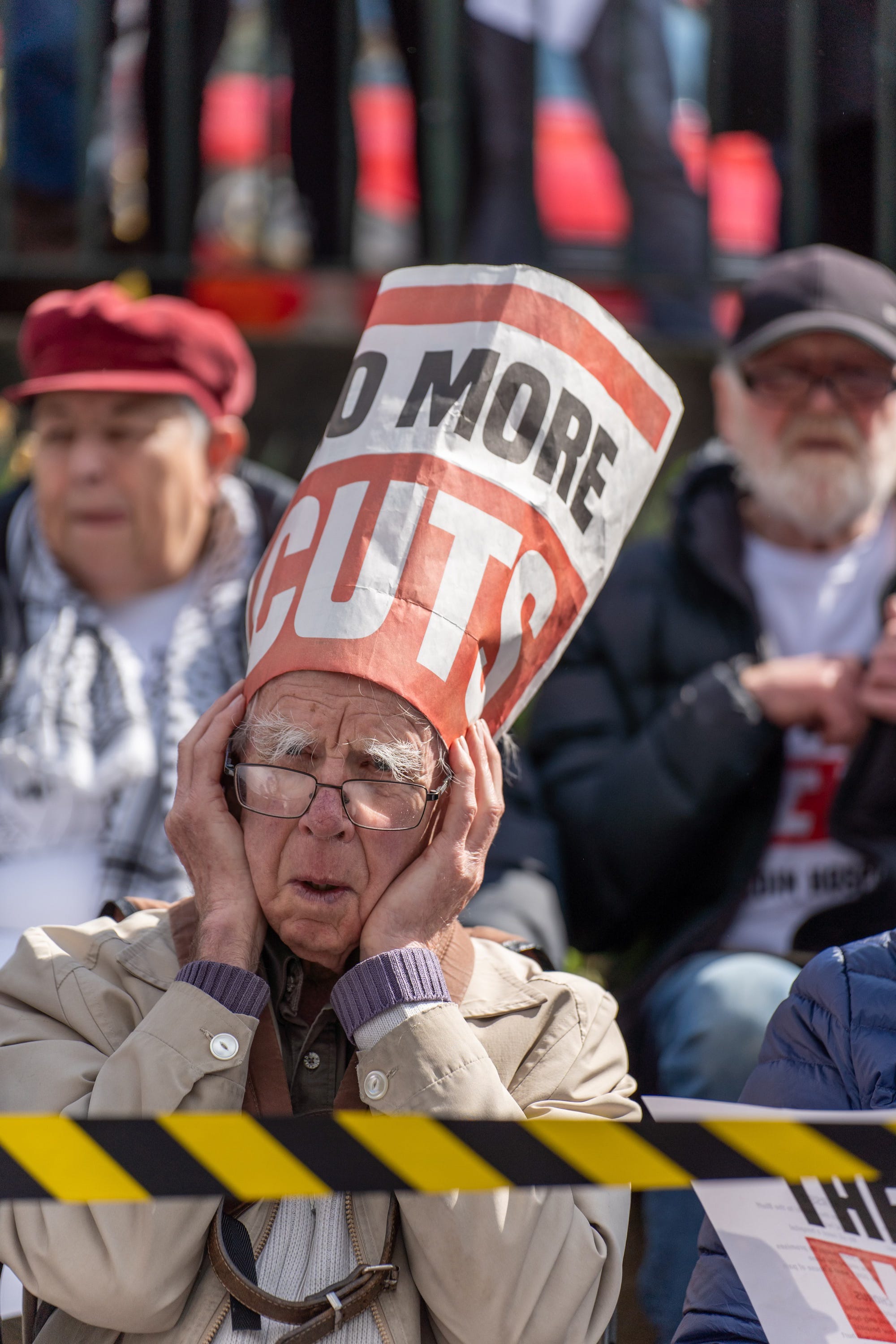
When photographing a protest, I try to get a few establishing shots showing the size of the crowd and the urban context. These are the kinds of photographs used to illustrate media reports about such events. My preference, though, is to get in close. I often shoot from within the stream of protesters as they march, taking photographs from their perspective to put the viewer in the middle of the action. Sometimes, I’ll walk backwards and pick out individual protesters and signs. Sometimes, I’ll stop on the side and shoot from a low angle. I generally avoid high vantage points, as that would reduce the visual stature of the protesters and result in a more detached, less engaging image.
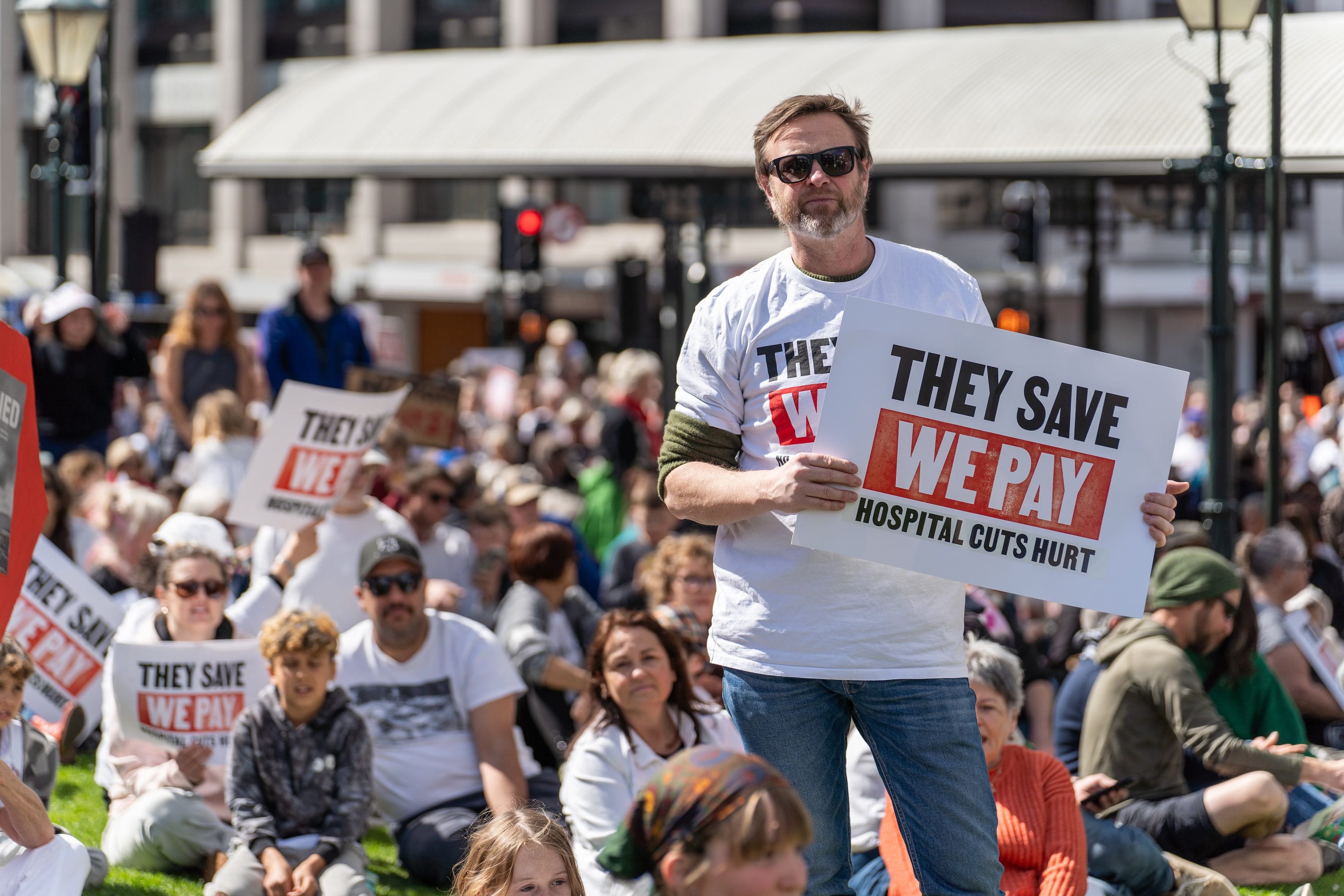
Before the march starts, and after people have assembled to hear speeches, it’s possible to ask for permission to take photos of individuals and their signs. Because I use a traditional camera with a long lens, I’m quite conspicuous, and people sometimes ask if I’m working for a news outlet. The purpose of a protest is to be seen in public, advocating for or against something, so I rarely encounter someone who does not want to be photographed. When everyone is marching, exchanging a few words or a smile is usually enough to signal that it’s OK to raise my camera and press the shutter button.
Experienced photographers often talk about the importance of depth of field. Some suggest that the difference between a snapshot and a photograph is control over depth of field. Smartphone cameras usually take photos with a wide depth of field by default, ensuring that the intended subject is in focus. More recent devices offer greater control, even allowing the photographer to alter the focal point and f-stop after capturing an image. Choosing the point of focus and limiting how much is in focus can simplify a scene, eliminate distracting details, and direct the viewer’s attention to what caught the photographer’s eye.
135 full-resolution photos of the protest, including those below, can be accessed via this link.
What’s next?
Before documenting the protest, my intention for this post was to share more photos of Toronto. I’ll return to them in my next post.
What do you think?
I invite you to leave a comment below.
Great coverage of an important event, Mark. I especially love the pic of the elderly gentleman who looks equal parts Pope and Cat In The Hat!
Dunedin isn't panicking, it's organising.
https://www.deviantart.com/deepred6502/art/Don-t-Panic-Organize-1087842688