
164. Student Strike for Education
“Increasingly, people are set up to think about themselves, and so they do. [...] Those who can afford to be here are here.” — OUSA President Grant Robertson in 1993

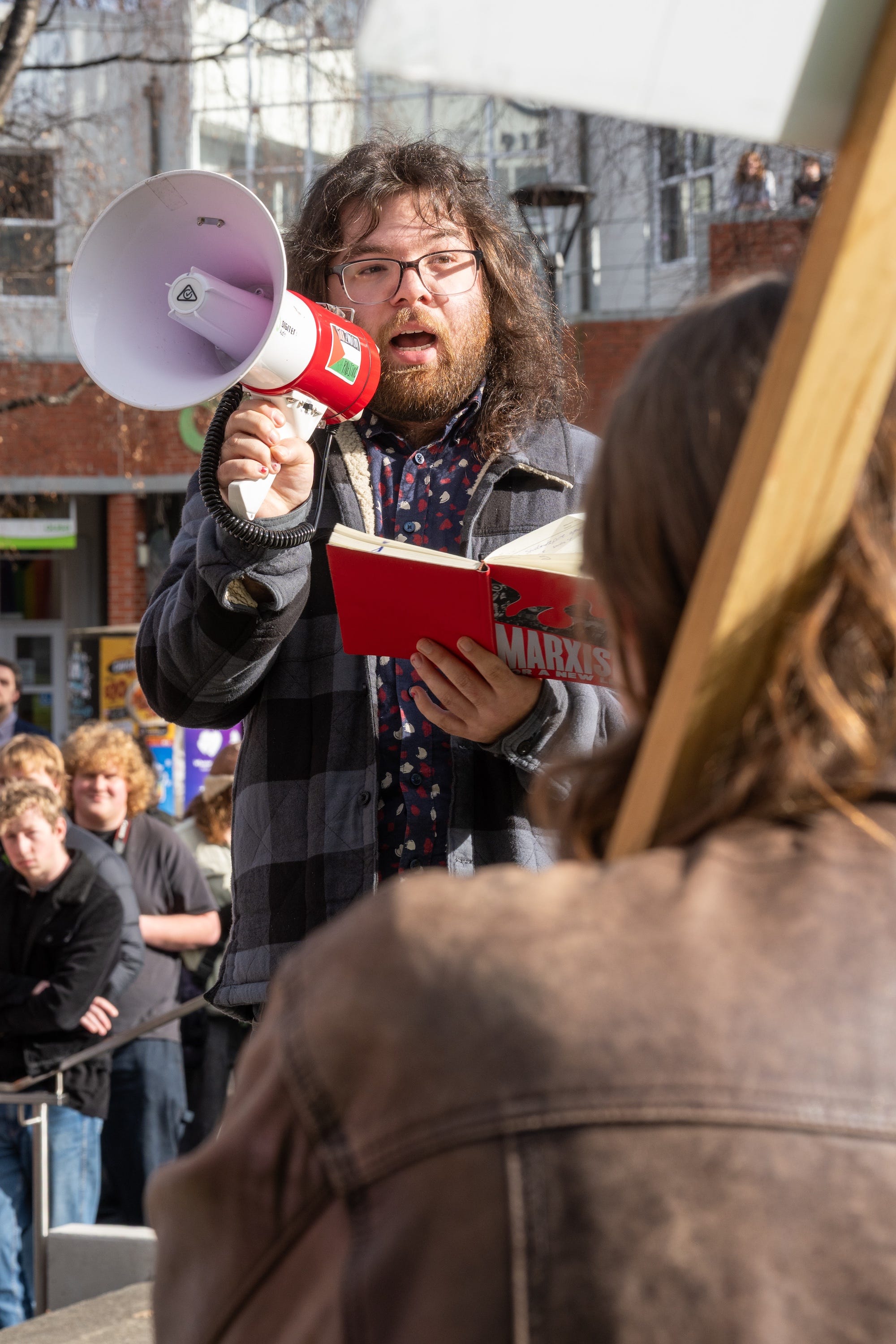
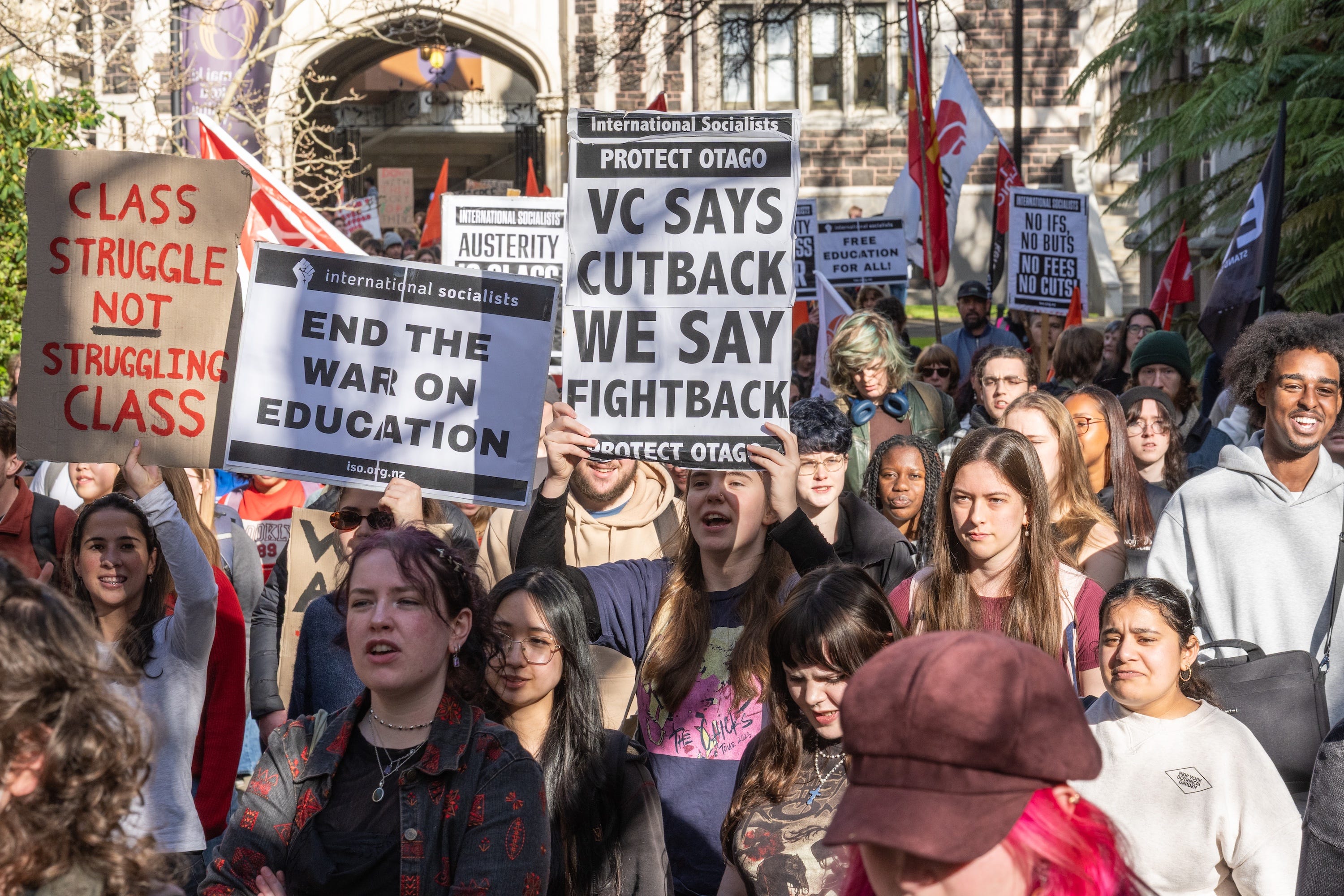
It’s been a while since I photographed a protest, but I didn’t want to miss the Student Strike for Education at the University of Otago here in Ōtepoti Dunedin, Aotearoa New Zealand, this past Wednesday. The first student protest I photographed there was in 1993, the year I moved to New Zealand and started teaching in the Department of Design Studies. In September that year, students occupied the Registry (Clocktower) Building, where the University Council was meeting to consider fee increases. At the time, the Otago University Students’ Association (OUSA) was led by Grant Robertson. He later became a prominent Labour politician and is now the Vice-Chancellor of the University of Otago.
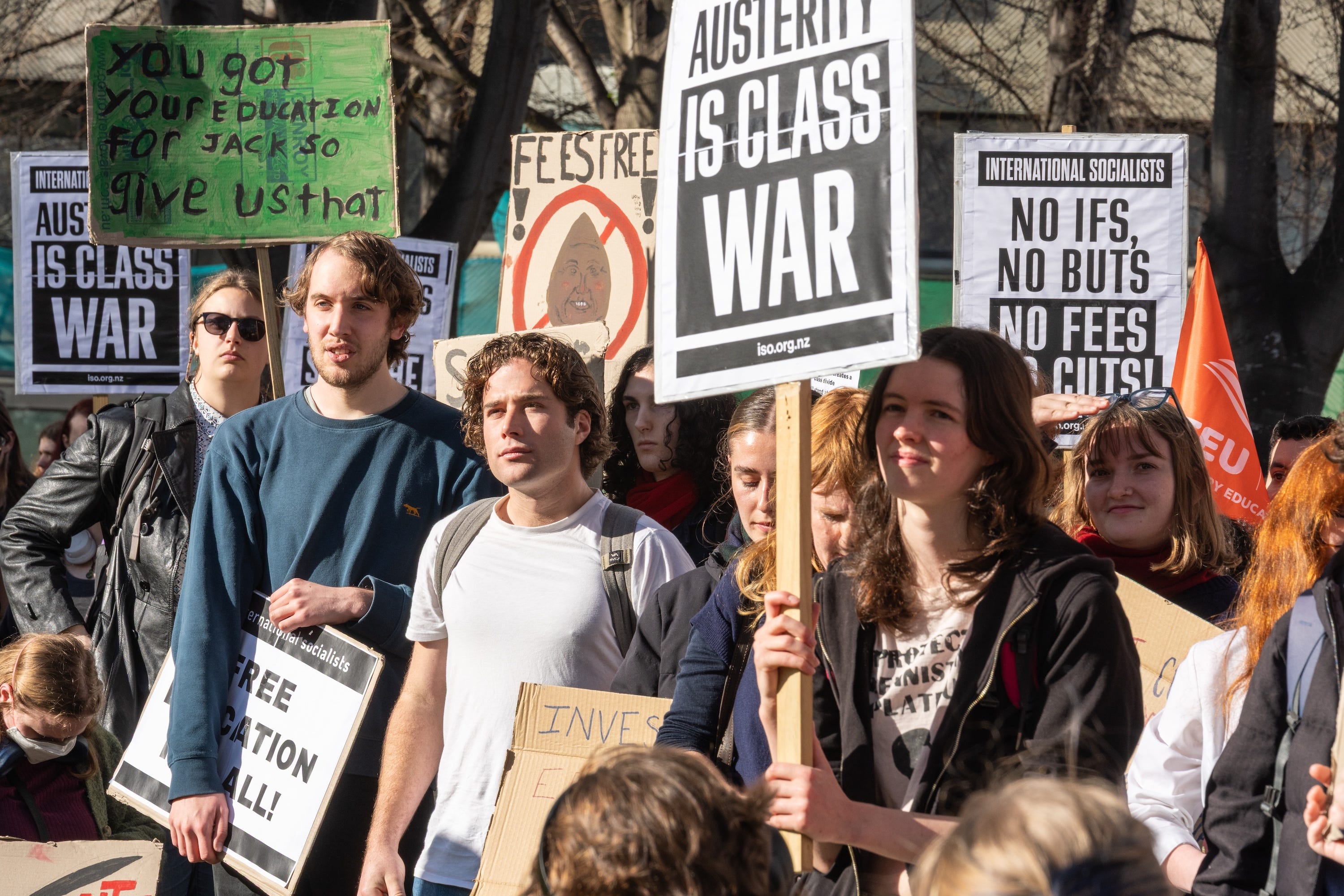
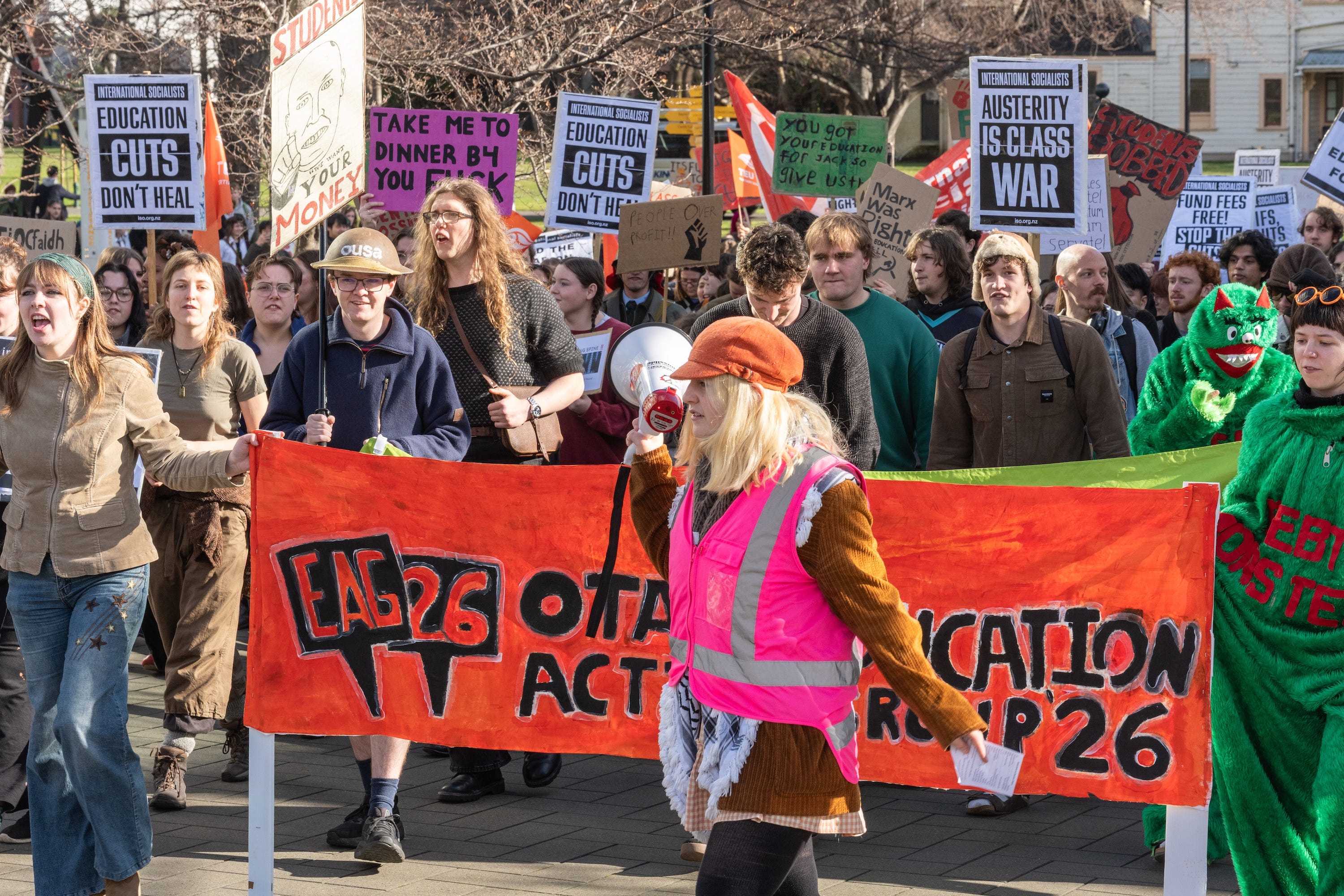
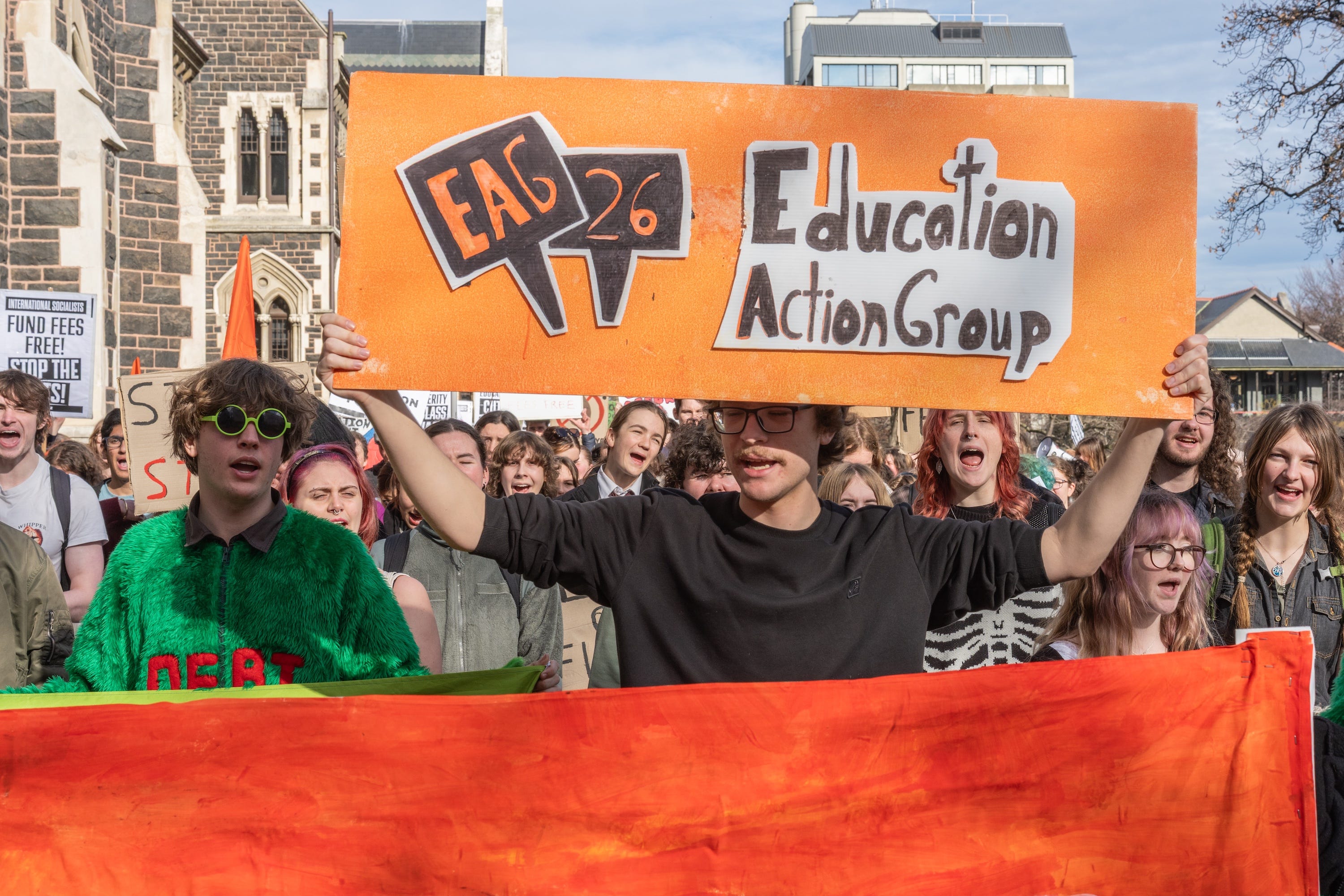
Tuition fees at Otago and other New Zealand universities are much higher today than they were in 1993. As in other English-speaking countries such as the UK, Australia, and Canada, strong neoliberal reforms in higher education have resulted in substantial student fees (“user pays”), high student loan debt, increased dependence on international student revenue, and competition between universities that are pressured to behave more like businesses. Organisers of the recent protest at Otago have four main demands: fees-free education, funding for universities above inflation, independent student unions, and a universal student allowance. They’re also calling on the University not to increase fees further, not to cut academic staff or programmes, and to resist Government austerity measures.
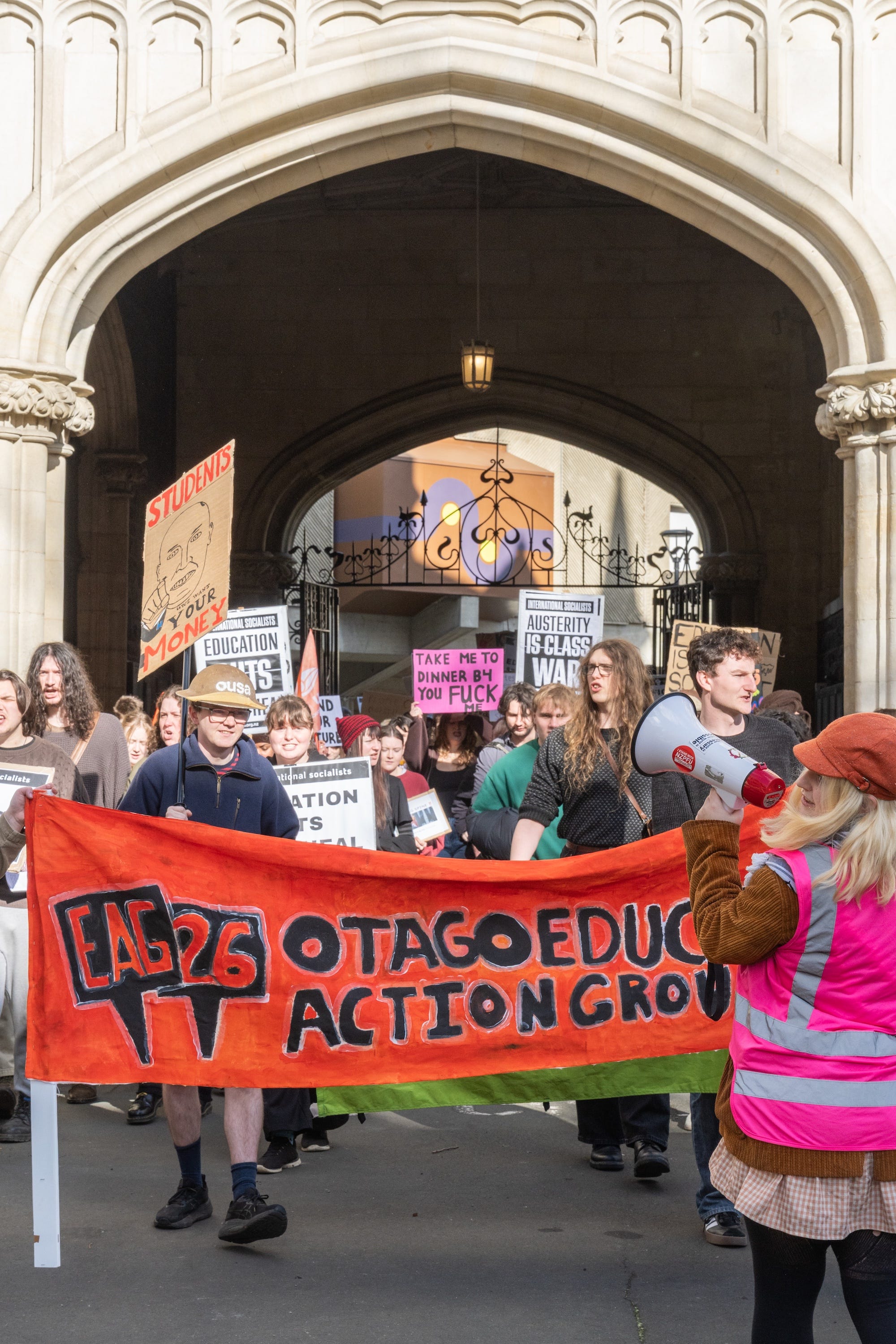
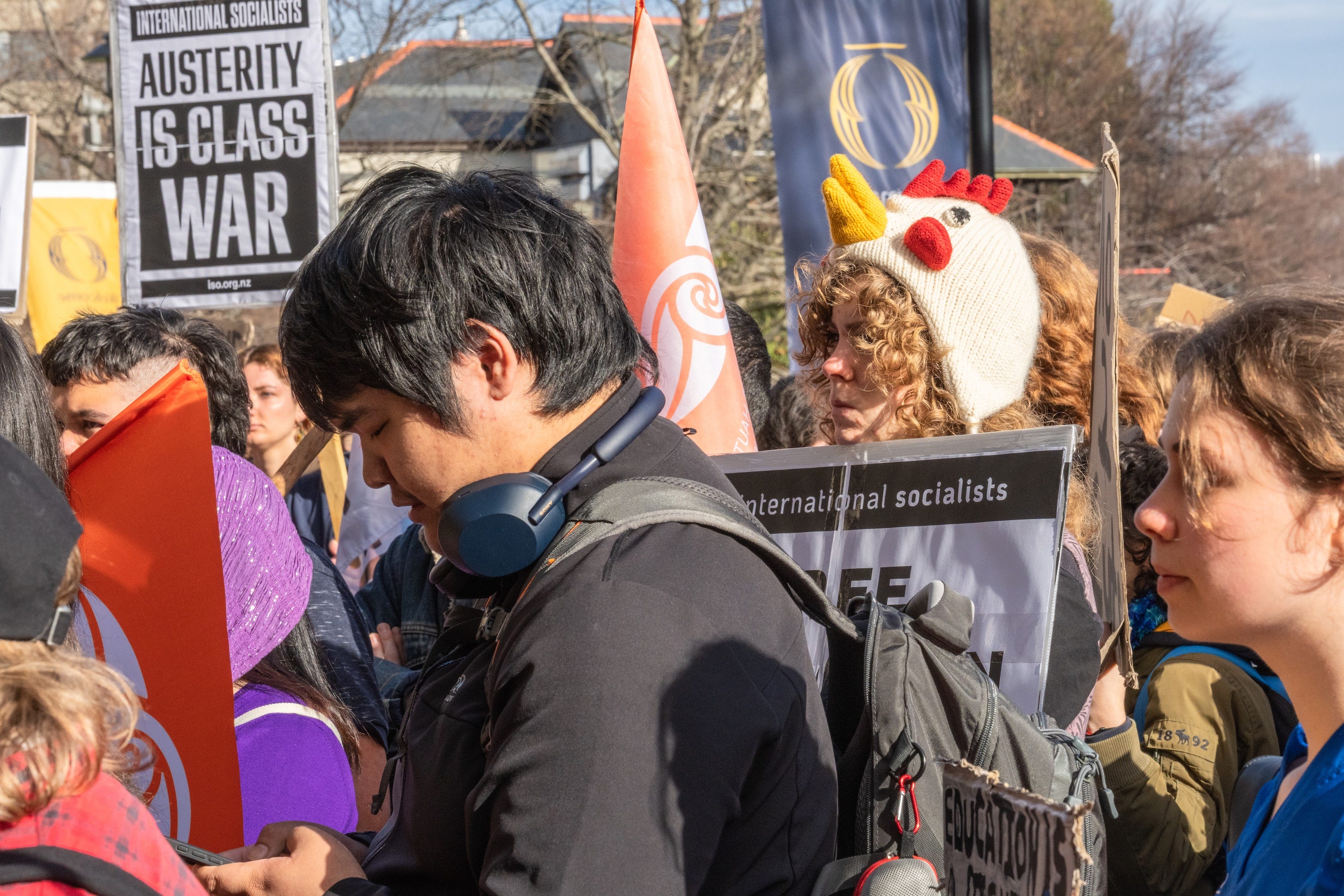
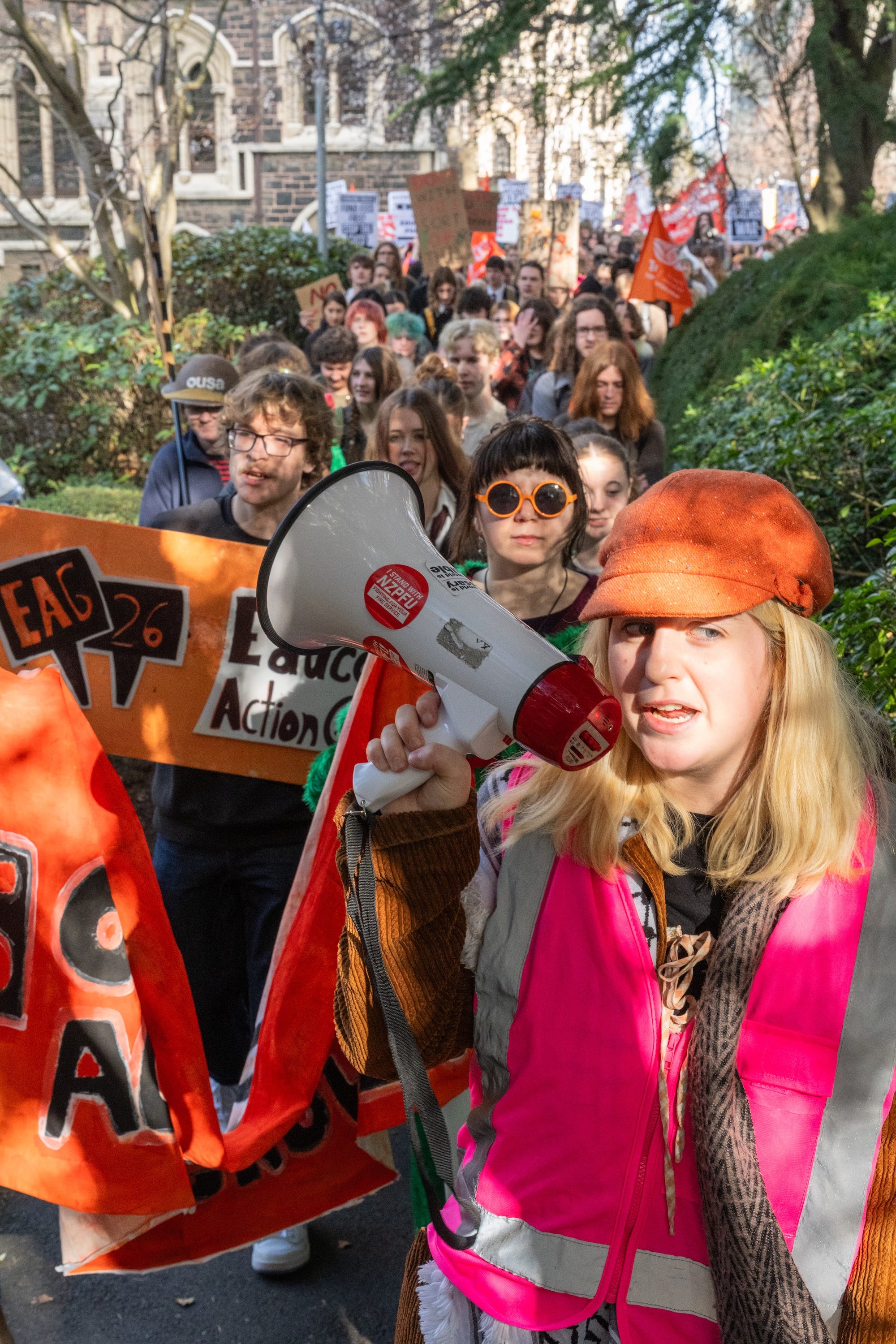
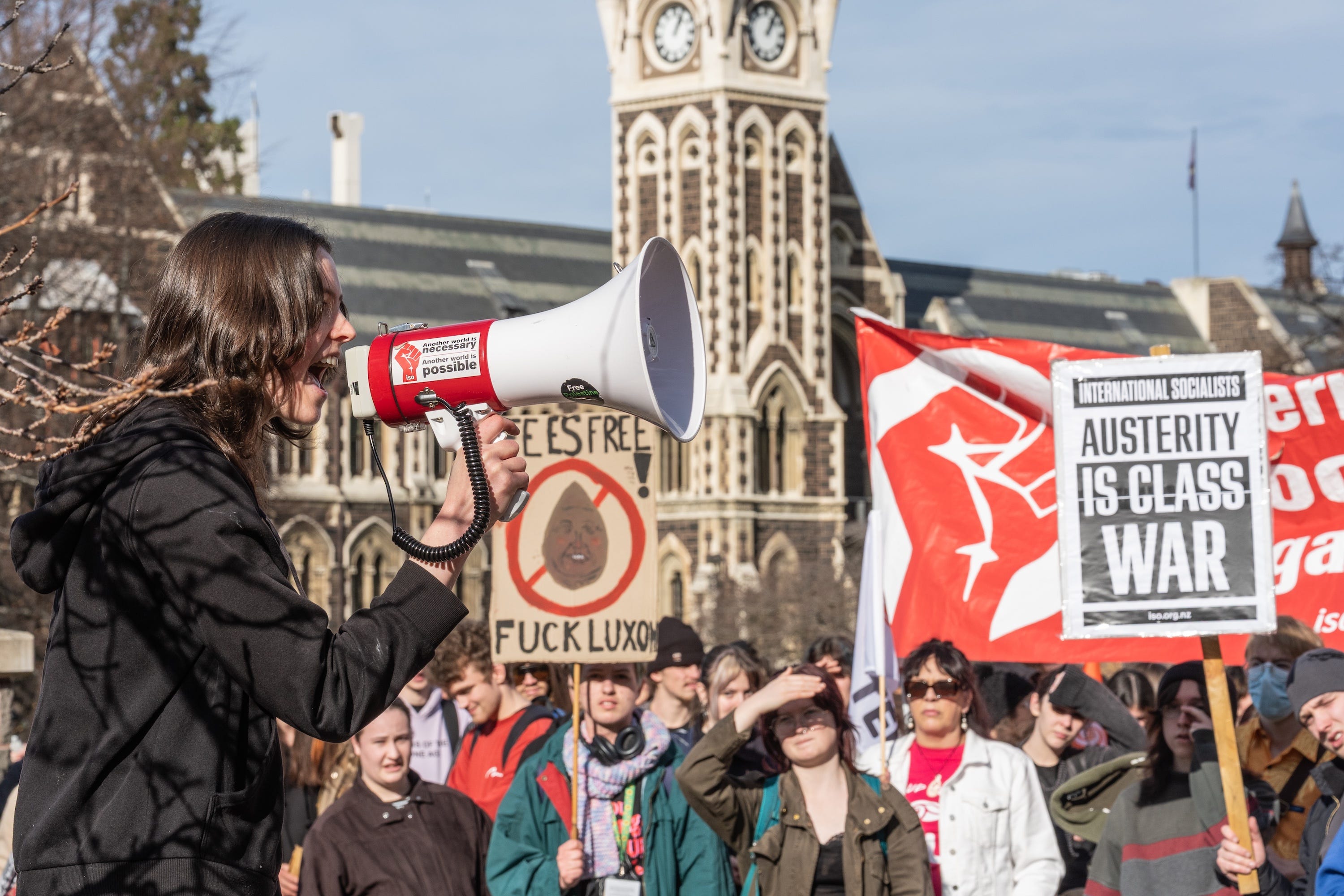
Protests are public events staged to make a point, demand attention, invite documentation, and encourage action. Designed to be disruptive, they occupy and dominate public space and address anyone and everyone within sight and hearing distance. People, placards, speakers, marching, drama, and high emotions — there’s plenty to take in. Protests can be good subjects for a street photographer, especially if you sympathise with the causes they promote. But they can be challenging — you have to be fast on your feet and react quickly to changing circumstances, wielding your camera like an extension of your body.
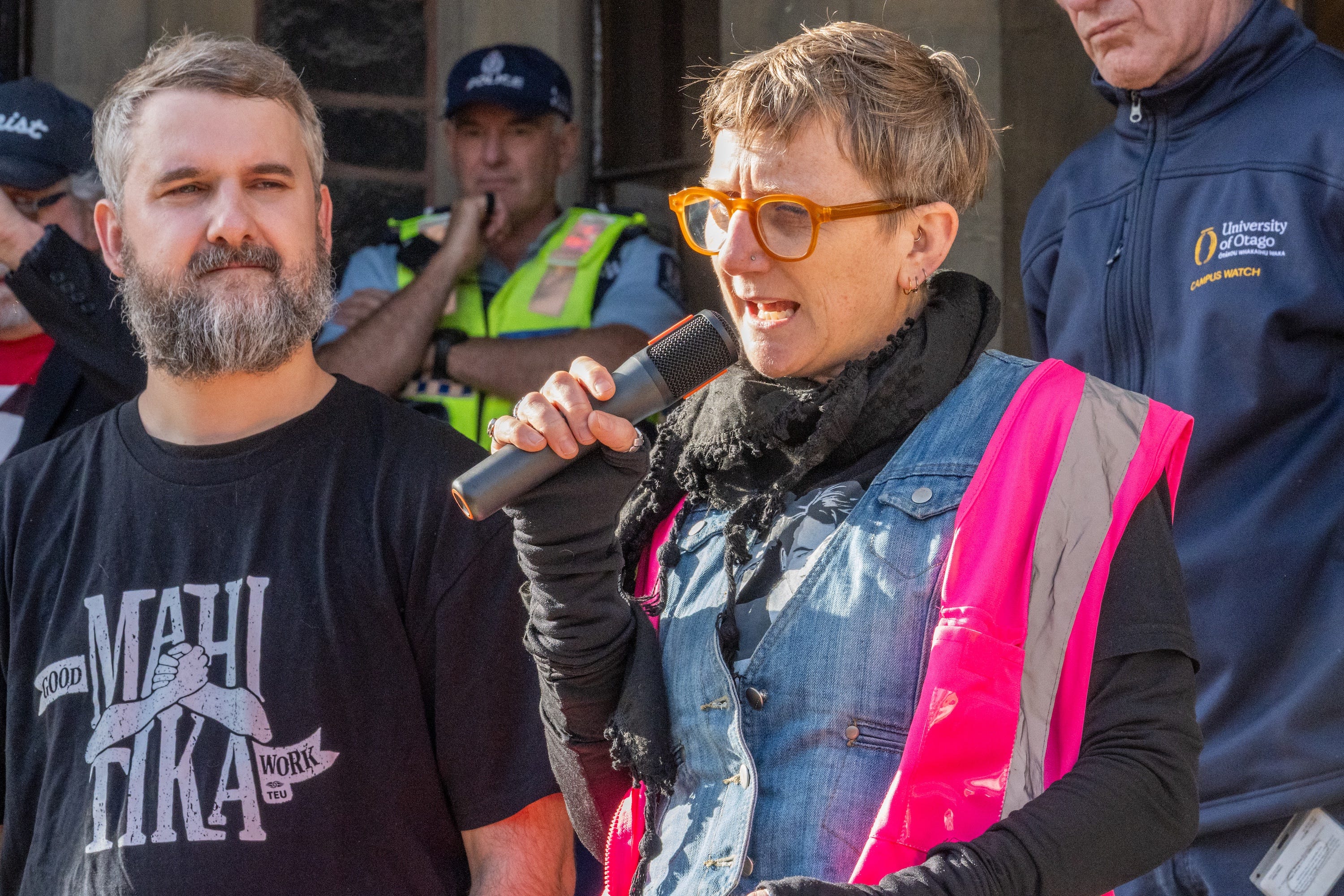
I usually use a 55mm prime lens for street photography, but for events like this I switch to a 35–150mm telephoto. I like to photograph from the middle of the crowd to get a protester’s eye view and try to get close to the speakers to increase the sense of being there. When the group is marching, I walk close to the front to get wide-angle shots of the leaders carrying the main banner and zoom in to frame small groups and their signs. Although my presence as a photographer is obvious, I weave through the protesters as though I am one of them, raising my camera quickly to capture images as the event unfolds.
You can see all the final photographs that I shared with the organisers here.
What do you think?
I invite you to leave a comment below.
Thank you for this, Mark. I feel energy around protests and have also photographed them. I feel like it can be important to both document these moments and tap into the humanity that is part of them. Nice work.
It’s amazing how similar student protests look regardless of the location. Bearded agitators, references to Marx, ‘No ifs, no buts’ slogans, cardboard signs, hi-vis jackets. It seems that higher education is taking the brunt of neoliberal ‘reforms’ and, slowly, imploding. I went to university in the 80s - Thatcher, the miners’ strike, AIDS etc. I naively thought that “things could only get better.” Young people today have so much to be angry about it must be hard to know where to start.