
101. Closed and Open Images
The lecturer and the therapist

If I compare my work to street photography I’ve seen in books or online (including on Substacks), I would say that my default approach is tight and controlled — perhaps overly so. By nature, I’m deliberative rather than impulsive, and not much of a risk-taker. Whenever possible, I frame a scene as carefully as I can through the viewfinder before taking a shot. I keep the horizon level, look for balance, and focus on a dominant subject or element. Often, I will start with a graphically interesting background and wait for something to enter the frame to complete the composition. I’ll discuss two recent photos that illustrate this strategy, and a third that suggests a different approach.
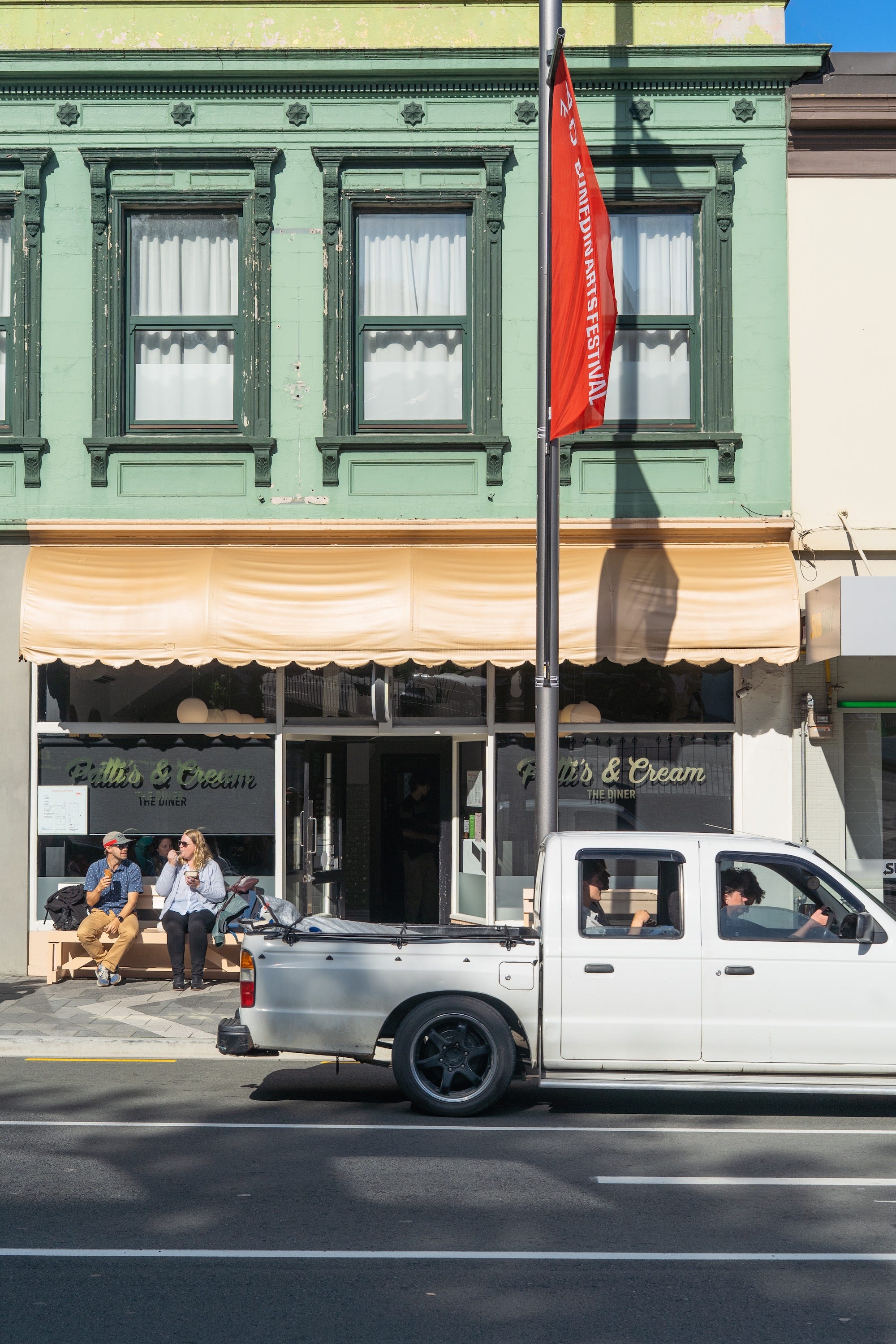
The first is a shot of an ice cream shop and diner on George Street, here in Dunedin (101a). I was attracted by the gold awning shimmering in the late afternoon light. I positioned myself across the street so that I could frame the facade with the awning and include the band of lime green at the top, a small rectangle of blue sky in the upper right corner, and the white lines on the road. I watched the movements of people and passing vehicles and pressed the shutter when things seemed to fall into place. Although the pickup truck is cut off in this shot, the image is resolved, self-explanatory, and easy to read quickly.
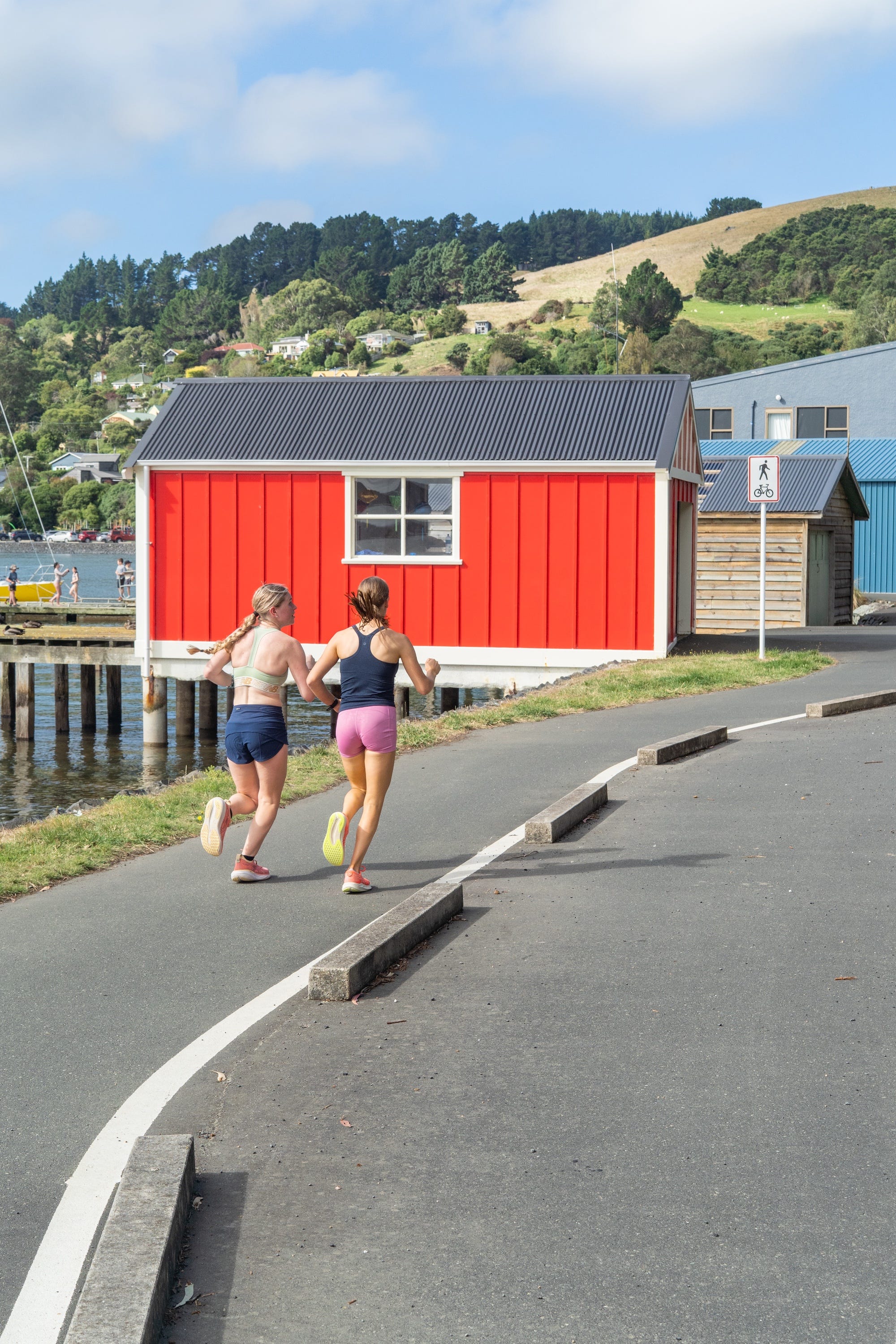
It was sunny again the next day (we get our most settled weather in autumn) and I visited Macandrew Bay, on the Otago Peninsula, where I spotted a shed that had recently been painted red (101b). I knew there was a potential shot of the shed with the tree-covered hills in the background, but the shed was not well lit. I worked out where to stand (I was using a 55mm fixed lens again), made a few test images, and came back about an hour later, when I knew the building would be in direct sunlight.
The path provided strong leading lines to the upper third, where I positioned the bright red shed. I wanted to use the negative space on the bottom right, include the sheds to the right (but not a distracting sign), just enough sky and fluffy clouds, and try to catch some of the children on the dock in the distance on the left (and perhaps a bit of the yellow boat that had docked briefly). I worked out the framing and waited, raising my camera when walkers, joggers, and cyclists passed in front of the left side of the red shed. The resulting shot looks as I expected. I think the composition works, however, like the first image, it doesn’t demand very much of the viewer. There is no mystery to solve. The case is closed.
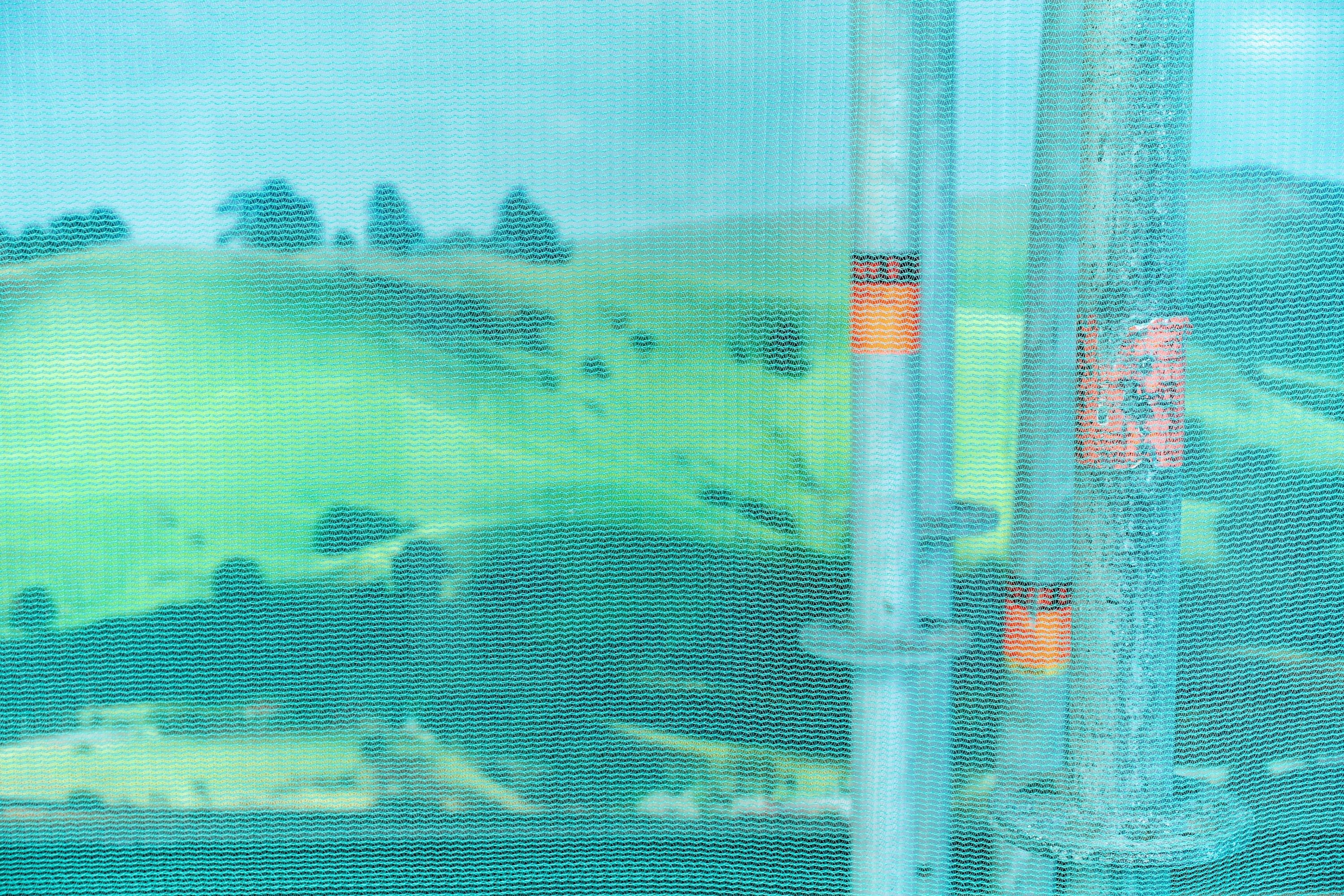
On my way home on the same day I took the photo of the ice cream shop, I passed a construction site on George Street near the Dunedin City Council building, which I had passed many times before. It was late in the afternoon, the light had gone from the street, and I was pretty worn out from a mostly fruitless search for good subjects. Still, the vivid orange labels on the scaffolding poles against the green background caught my attention. I crouched down, took a quick shot (101c), and continued on my way. Later, when I reviewed the photos I had taken over the weekend, this was the image that stood out. There’s no clear subject, no action, no human drama, and no compositional complexity. The blue plastic mesh is in focus but everything behind it is hazy and indistinct. Our visceral response to the colours distracts us from the task of making sense of the scene. It’s not clear where we are or what we are looking at. We contemplate the possibilities, but the evidence is ambiguous and the meaning remains elusive. It’s open to interpretation.
The difference between closed and open images is like the difference between prose and poetry. Prose tells you something — it can be confident, factual, and explanatory. Poetry poses questions — it can be uncertain, suggestive, and open-ended. Prose tells you a story; poetry helps you create your own. One is a lecturer; the other, a therapist.
What’s next?
In addition to the photos of shop reflections and the trip to small Central Otago towns I mentioned last week, I also took many photos of public buses yesterday. What I share next week will depend on which images I am ready to comment on.
What do you think?
I invite you to leave a comment below.
I enjoy these evocative, thoughtful observations as much as the photos they accompany.
I'm not as careful as you ... I'm sort of like prose typed out left-handed on a mobile phone, but I do often get the shot. When I try to be careful is usually in landscapes or other genres. However, you've inspired me to see if I can approach it differently. Great images, Mark!